
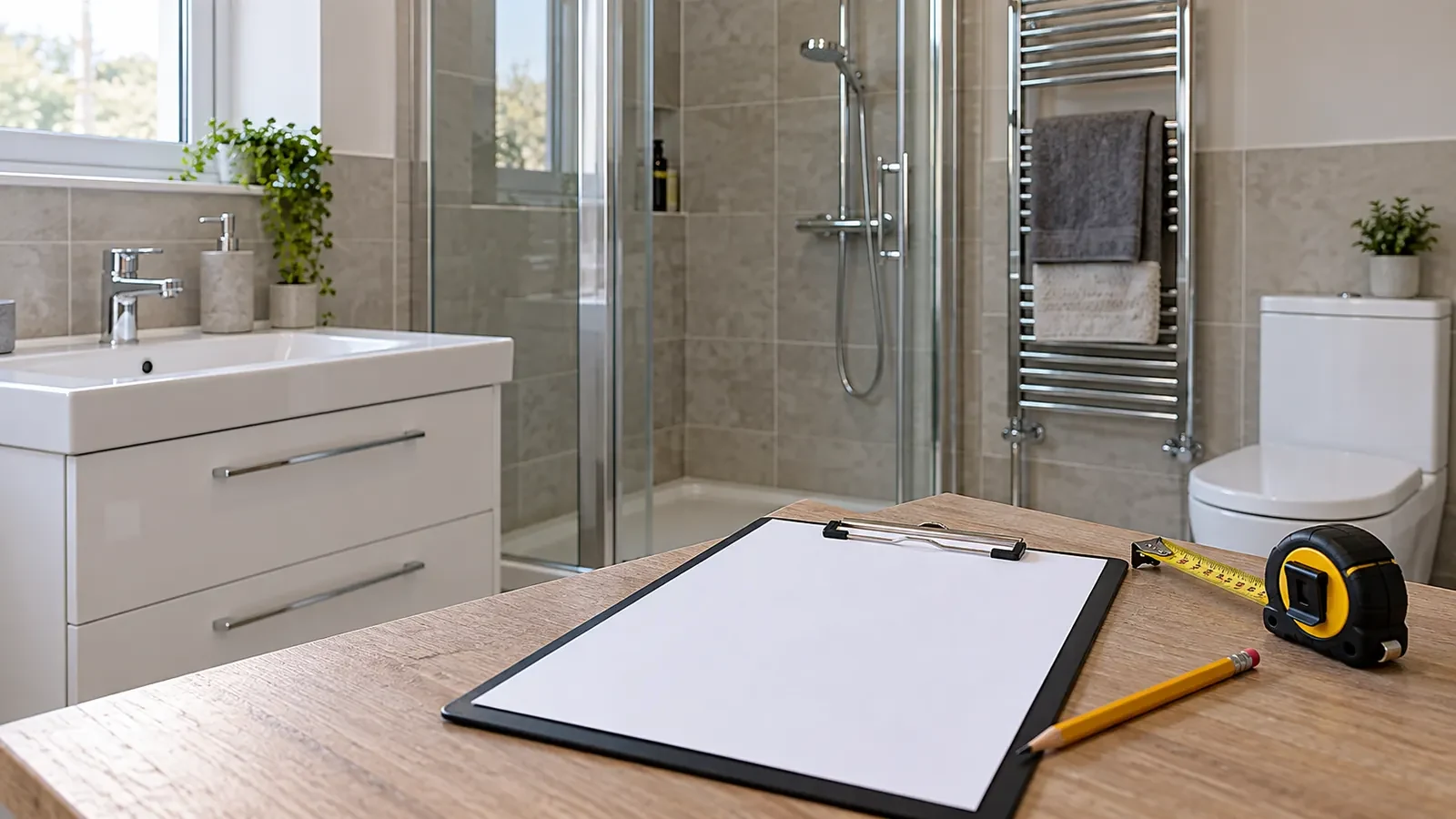
A useful bathroom installation quote describes the finished room and the work needed to get there. It should identify who supplies each item, what happens behind the tiles, how waste is removed, whether VAT is included and how changes will be agreed. A single total cannot tell you whether two fitters have priced the same job.
Before asking for quotes, sketch the current layout and decide which fittings you want to keep in place. Tell each company about leaks, soft flooring, poor ventilation or awkward access. You can then compare their written proposals against one clear brief.
Start with the same scope for every fitter
A like-for-like replacement of a bath, basin and toilet is different from moving the toilet, replacing a bath with a shower or stripping a room back to the walls. List the fixtures, fittings and finishes you expect. Mark anything you will buy yourself. If you have chosen a shower, check that its type suits your hot-water system and the available electrical supply.
For an initial budget, look at bathroom installation prices for the type of project you have in mind. Treat published figures as starting points: a site-specific written quote should reflect the room, the chosen products and any repairs discovered during a survey.
Check the work beneath the visible finish
Removal and preparation
Ask whether the price includes protecting the route through your home, removing the old suite and tiles, making good the walls and floor, and disposing of waste. A quote that starts at “fit new suite” may leave demolition, skip hire or repairs to you. If damp or damaged timber is suspected, ask how the fitter will assess it and price any extra work before proceeding.
Plumbing and drainage
The quote should identify whether existing pipe positions stay put. Moving a WC may involve more drainage work than shifting a basin. Check who supplies valves, wastes, traps and any new pipework, and whether the price includes testing for leaks. If your water pressure or hot-water supply is uncertain, raise that before selecting a shower.
Waterproofing and tiling
Tiles and grout are the visible finish; the shower area also needs a suitable waterproofing approach. Ask what will be installed behind wet-area tiles, how corners and pipe penetrations will be sealed, and how it connects to the tray or bath. Confirm the area to be tiled, tile size, pattern, trims, grout and silicone. An allowance for “tiles” alone may exclude adhesive, preparation and labour.
Electrics, lighting and ventilation
List any electric shower, extractor fan, heated mirror, lighting or electric underfloor heating. Ask who will carry out the electrical work and what testing or certification will be supplied. In England, Approved Document P sets out guidance on electrical safety in dwellings. Rules differ across the UK, so the contractor should confirm the applicable requirements for your property.
If the fan is being replaced or moved, confirm its specification, duct route and external outlet. A new fan is little help if it discharges into the loft or its ducting is blocked. England's Approved Document F covers ventilation requirements; ask the installer how the proposed work meets the rules that apply locally.
Compare written quotes line by line
Ask each fitter to show the total, VAT treatment, what is included and what is excluded. Citizens Advice recommends written quotes with a breakdown of work and materials, a validity period and a clear explanation of when the price may change. A quote is different from a rough estimate; check which document you have been given.
- Products: Identify makes, models, sizes and finishes, or state a realistic allowance for items not yet chosen. Confirm who orders, receives and checks them.
- Labour: Check whether plumbing, tiling, decorating, electrical work and final sealing are all covered.
- Exclusions: Ask about hidden damage, floor levelling, plastering, specialist waste disposal and changes to the layout.
- Timing: Record the expected start date, duration, working hours and whether the bathroom will be usable during the work.
- Payment: Agree the deposit, stage payments and final payment in writing, along with the process for approving variations.
- Handover: Ask what test results, manuals, guarantees and completion paperwork you will receive.
The cheapest total may use a lower product allowance or leave out preparation. Compare the scope first, then the price. A clearly itemised proposal also makes it easier to remove or upgrade a feature without guessing what the change should cost.
How to prepare a brief for bathroom fitters
You do not need a finished design, but a short brief makes visits more productive. Take measurements as a guide; the fitter should still check them on site before ordering.
- Photograph and sketch the room. Show the current bath or shower, basin, WC, window, door and any visible pipe boxing. Note approximate dimensions.
- Describe the result you want. Say what stays in place, what moves and whether access, storage, cleaning or ventilation is the main priority.
- List known problems and choices. Mention leaks, loose tiles, weak water flow and any suite or tile already purchased. State your preferred finish and spending limit.
- Ask for an itemised written proposal. Give the same brief to each fitter and ask them to mark allowances, exclusions, VAT and the way extra work will be approved.
For a full refit, the fitter may need a site visit to inspect the room and discuss the layout. Do not treat an online starting figure as a final contract price.
Frequently asked questions
Should a bathroom quote include tiles and sanitaryware?
Only if the written scope says so. Check whether the fitter supplies them, whether the figure is an allowance or a named product, and who pays if you choose a more expensive item.
What if hidden damage is found after work starts?
Ask the fitter to stop and explain the finding, the proposed repair, its price and any change to the timetable. Approve the variation in writing before that extra work goes ahead.
Is an estimate the same as a quote?
No. An estimate is a provisional prediction; a quote sets an agreed price for a defined scope, subject to its stated terms and any agreed changes. Make sure the document names the work it covers.
How many bathroom quotes should I compare?
Several written proposals can help you understand the likely scope and price. Compare them against the same brief and check insurance, relevant experience and references before choosing a fitter.
If you are ready to discuss the work, request bathroom design, supply and installation quotes through Local Pros. Describe the room and any known problems so the responding tradespeople can quote for the job you actually need.