
Need Soffits & Fascia quotes?
We can arrange for up to 4 local tradesmen to contact you with free, no-obligation quotes
* Required fields.
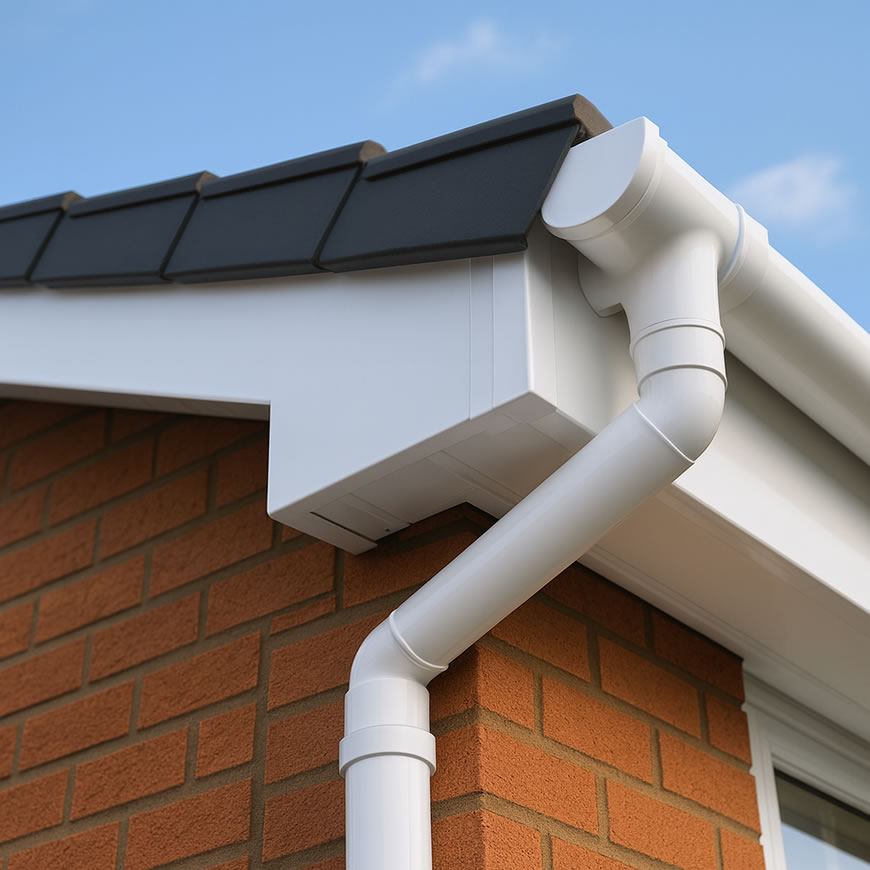
Fascias and soffits sit around the edge of a roof, where they help protect the rafters, support the guttering and close the space beneath the eaves.
Because they sit high above the ground, homeowners may not notice problems until paint starts peeling, gutter brackets pull away or water begins running down the outside walls. By this stage, the visible damage may only tell part of the story.
Replacing fascias and soffits can improve the appearance of a house and reduce future maintenance. More importantly, it gives the contractor an opportunity to inspect the ends of the roof timbers, improve ventilation and correct problems around the eaves.
However, quotes can vary widely. One contractor may price a straightforward uPVC over-cladding job, while another may quote for full removal, timber repairs, ventilation, gutter replacement and scaffolding.
These are not the same job.
This guide explains what fascia and soffit replacement quotes should include, how much the work may cost and how homeowners can compare contractors properly.
What Are Fascias and Soffits?
Fascias and soffits form part of the roofline.
Although people often mention them together, they perform different jobs.
Fascia Boards
The fascia is the vertical board fitted along the lower edge of the roof.
It covers the ends of the roof rafters and provides a surface for gutter brackets. On many houses, it also forms one of the most visible parts of the roofline.
A fascia board must remain strong enough to support the guttering when it contains rainwater, wet leaves, moss or snow.
Soffit Boards
The soffit covers the underside of the roof overhang between the fascia and the exterior wall.
It closes the eaves, helps keep out birds and insects and may provide ventilation to the loft.
Soffits can be flat, sloping or fitted directly between exposed rafters. Their design depends on the age and construction of the property.
Fascia and Soffit Functions at a Glance
| Component | Location | Main purpose |
|---|---|---|
| Fascia board | Vertical face at the roof edge | Supports guttering and protects rafter ends |
| Soffit board | Underside of the roof overhang | Closes the eaves and may provide ventilation |
| Bargeboard | Sloping edge of a gable | Protects and finishes the verge |
| Box end | Corner where fascia meets bargeboard | Closes and finishes the roofline junction |
| Eaves vent | Within or above the roofline | Allows airflow into the roof space |
| Eaves tray | Beneath the roofing underlay | Guides water safely into the gutter |
| Guttering | Fixed to the fascia or roof | Collects rainwater |
| Downpipe | Runs vertically down the wall | Carries water towards drainage |
What Does Fascia and Soffit Replacement Involve?
The scope of the work depends on whether the contractor removes the existing boards or covers them.
A proper full replacement may include:
- Installing scaffolding or another safe access system
- Removing the gutters and downpipes
- Taking down the old fascia and soffit boards
- Inspecting the rafter ends and roof timbers
- Repairing rotten or weakened timber
- Checking the lower edge of the roof underlay
- Installing eaves protection trays where needed
- Providing suitable roof ventilation
- Fitting new soffit boards
- Installing new fascia boards
- Forming corners, joins and box ends
- Reinstalling or replacing the guttering
- Testing the drainage system
- Removing the old materials and waste
Some contractors also replace bargeboards, dry verge systems and decorative roofline details as part of the same project.
What Should a Fascia and Soffit Quote Include?
A useful quotation should describe exactly what the contractor will remove, supply and install.
It should not simply say “replace fascias and soffits”.
At a minimum, look for details covering:
- The length of roofline included
- Which elevations will be worked on
- Full removal or over-cladding
- Fascia material, profile and thickness
- Soffit material and style
- Colour and finish
- Ventilation method
- Eaves trays
- Rafter-end inspection
- Allowance for timber repairs
- Bargeboards and box ends
- Guttering and downpipes
- Scaffolding or access equipment
- Waste removal
- Guarantees
- VAT
- Start date and expected duration
Without these details, it is difficult to compare two prices fairly.
Full Replacement Versus Capping
One of the most important differences between quotes is whether the contractor plans to remove the old timber.
Full Fascia Replacement
Full replacement means taking down the existing boards before fitting the new roofline.
This exposes the rafter ends and allows the contractor to check for hidden rot.
Full replacement generally includes:
- Removal of old fascia boards
- Removal of old soffits
- Inspection of timber behind them
- Repairs to damaged rafter ends
- New full-depth replacement fascia
- New soffit boards
- New or refitted guttering
This approach normally costs more than capping. However, it gives the contractor a better opportunity to deal with the underlying condition of the roof edge.
Fascia Capping or Over-Cladding
Capping involves fitting a thinner uPVC board over the existing timber fascia.
It may also be called:
- Over-capping
- Over-cladding
- Cover boarding
- Fascia cladding
Capping can be suitable when the timber underneath is completely dry, stable and securely fixed.
It should not be used to hide rotten or crumbling timber.
Full Replacement or Capping Comparison
| Feature | Full replacement | Capping |
| Existing fascia removed | Yes | No |
| Rafter ends fully visible | Usually | No |
| Hidden rot can be repaired | Yes | Limited |
| Initial cost | Higher | Lower |
| Installation time | Longer | Shorter |
| Board type | Full replacement board | Thinner cover board |
| Suitable over rotten timber | Yes, after repairs | No |
| Long-term confidence | Generally higher | Depends on timber underneath |
A quote for capping will often be cheaper than a quote for full replacement. Therefore, homeowners should not compare the two prices as though they cover identical work.
Signs That Fascias and Soffits Need Replacing
Not every visible mark means that complete replacement is necessary.
However, several warning signs can indicate that the roofline is deteriorating.
Rotten Fascia Boards
Timber fascias can rot when paint fails or water repeatedly runs behind the gutter.
Rotten areas may appear:
- Soft
- Darkened
- Crumbly
- Split
- Swollen
- Flaky around fixings
The gutter brackets may also start pulling away because the screws no longer grip the timber.
Peeling and Blistering Paint
Peeling paint exposes timber to moisture.
A sound board may only need preparation and repainting. However, widespread peeling often shows that maintenance has been delayed.
If water has already entered the wood, replacement may provide better value than repeated filling and painting.
Sagging Gutters
The fascia supports most domestic gutter systems.
When the fascia weakens, gutter brackets can loosen. The gutter may then sag, hold standing water or overflow.
Sagging can also result from poor bracket spacing or heavy debris, so the contractor should confirm the cause before recommending fascia replacement.
Cracked or Sagging Soffits
Soffit boards may crack, bow or come away from their fixings.
Open gaps can allow birds, wasps and other pests to enter the roof space.
Older boards can also become brittle, particularly when exposed to years of sunlight and temperature changes.
Water Running Behind the Gutter
Rainwater should travel from the roof covering into the gutter.
If the roof underlay has deteriorated at the eaves, water may run behind the fascia instead. This can soak the timber and cause staining on the walls below.
New eaves trays may be needed alongside fascia replacement.
Birds Entering the Roof
Bird activity near gaps in the soffit can indicate damage around the eaves.
The opening should be repaired, although active nests must be dealt with carefully and in line with wildlife protections.
Damp at the Edge of the Loft
Damp timber, mould or staining near the eaves may result from:
- Leaking gutters
- Damaged roof underlay
- Rotten fascias
- Missing eaves trays
- Faulty roof tiles
- Inadequate ventilation
- Condensation
The contractor should identify the cause before replacing the visible boards.
Frequent Repairs
A few isolated repairs may extend the life of a roofline.
However, replacing one section after another can become poor value when the whole system is ageing.
Repair or Replace?
| Condition | Repair may be suitable | Replacement may be better |
| Small area of peeling paint | Yes | No |
| One loose gutter bracket | Yes | No |
| One short cracked soffit section | Yes | Sometimes |
| Localised fascia rot | Sometimes | Sometimes |
| Widespread timber rot | No | Yes |
| Several gutter brackets pulling out | Unlikely | Yes |
| Multiple cracked soffit boards | Sometimes | Often |
| Birds entering through several gaps | Unlikely | Yes |
| Repeated roofline repairs | Unlikely | Yes |
| New roof being installed | Possible | Often practical |
| Whole roofline looks tired | No | Yes |
How Much Do Fascia and Soffit Replacements Cost?
Fascia and soffit replacement is often priced by the linear metre.
A broad UK estimate for supply and installation is around £115 to £185 per linear metre. A figure of approximately £150 per linear metre is often used as a starting point for budgeting.
However, the cost per metre does not always include everything.
Scaffolding, guttering, downpipes and timber repairs may appear as separate items.
| Type of work | Broad estimated cost |
| Fascia and soffit replacement | £115–£185 per linear metre |
| Small local fascia repair | £200–£600 |
| Short soffit replacement | £200–£700 |
| Replace one roofline elevation | £1,200–£3,000 |
| Small terraced house | £2,000–£4,000 |
| Semi-detached house | £3,000–£6,000 |
| Detached house | £4,500–£9,000 |
| Large or complex property | £7,000–£15,000+ |
| Scaffolding | £800–£2,500+ |
| Timber repairs | £200–£2,000+ |
| New guttering | £25–£60 per metre |
| New downpipe | £150–£400 each |
These prices are broad estimates rather than fixed quotations.
Properties with several gables, extensions, dormers or difficult access may cost considerably more.
Example Fascia and Soffit Replacement Quotes
| Example property | Possible quote range |
| Small mid-terraced house, front and rear | £2,000–£3,500 |
| End-terraced house with one gable | £2,800–£4,500 |
| Standard semi-detached house | £3,500–£6,000 |
| Bungalow with straightforward access | £3,000–£5,500 |
| Detached house with several gables | £5,000–£9,000 |
| Large detached property with timber repairs | £8,000–£15,000+ |
A bungalow is not always cheaper than a two-storey house.
Although access may be easier, a bungalow can have a longer roof perimeter and therefore require more material.
What Affects the Price of Fascia and Soffit Replacement?
Length of Roofline
The total length of fascia and soffit has a direct effect on the material and labour cost.
A contractor should measure:
- Front elevation
- Rear elevation
- Gable ends
- Porches
- Bay windows
- Extensions
- Garages
- Dormers
Two houses with a similar floor area can have very different roofline lengths.
Property Height
Working on a bungalow is often easier than working on a three-storey townhouse.
Taller buildings usually need more scaffolding and safety equipment.
Roof Shape
A simple terraced roofline may only have straight front and rear elevations.
A complicated detached house may include:
- Several gables
- Multiple corners
- Bay windows
- Dormers
- Low-level extensions
- Decorative box ends
- Changes in roof height
Each junction needs careful measuring, cutting and finishing.
Scaffolding
Scaffolding can form a significant part of the total quote.
The price depends on:
- Property height
- Number of elevations
- Ground conditions
- Conservatories and extensions
- Pavement licences
- Restricted side access
- Length of hire
Ask whether scaffolding appears in the quote or will be invoiced separately.
Existing Timber Condition
The contractor may not see all the timber damage until the old fascia comes off.
Rot can affect:
- Rafter ends
- Gable ladders
- Roof battens
- Timber bearers
- Soffit framing
- Roof decking near the eaves
The quotation should state how additional timber work will be charged.
Fascia Material
Standard white uPVC is usually one of the most economical options.
Other choices include:
- Coloured uPVC
- Woodgrain uPVC
- Treated timber
- Hardwood
- Fibre cement
- Aluminium
- Powder-coated metal
Bespoke timber and aluminium systems usually cost more.
Soffit Design
Plain flat soffits may cost less than wide, decorative or fully ventilated systems.
The required width also matters. A deep roof overhang needs more material than a narrow eaves detail.
Ventilation
Ventilation can be provided through:
- Continuous soffit vents
- Circular soffit vents
- Over-fascia vents
- Ventilated fascia systems
- Roof tile vents
- Ridge ventilation
The contractor should choose a method that suits the existing roof construction.
Guttering and Downpipes
Some quotes include complete gutter replacement, while others include only temporary removal and refitting.
New guttering adds to the cost but may make sense when the existing system is old, faded, cracked or too small.
Eaves Protection
Old roof underlay often becomes brittle where it reaches the gutter.
The contractor may recommend installing eaves trays to carry water safely into the gutter.
Waste Removal
Old boards, gutters and rotten timber must be removed from the property.
Check whether the quote includes skips, waste transfer and final cleaning.
Location
Labour and scaffolding rates tend to be higher in London and some parts of South East England.
Remote properties can also cost more because of travel and material delivery.
What Materials Are Available?
uPVC Fascias and Soffits
uPVC is the most common replacement choice for many modern UK homes.
Advantages
- Does not need painting
- Resistant to rot
- Available in several colours
- Relatively affordable
- Easy to clean
- Widely available
- Can match windows and doors
Disadvantages
- Can expand and contract
- Poor-quality boards may fade
- May not suit period properties
- Joints can become visible
- Thin products may distort
Good installation matters. Even a quality uPVC product can look poor when joints, corners and box ends are badly finished.
Timber Fascias and Soffits
Timber remains suitable for traditional and period properties.
Advantages
- Authentic appearance
- Can match original profiles
- Easy to customise
- Can be painted any colour
- Suitable for decorative bargeboards
Disadvantages
- Needs regular painting
- Can rot
- Maintenance costs continue
- Lower-quality timber may warp
- Installation and decoration can cost more
Timber should receive suitable treatment, priming and finishing before or during installation.
Aluminium Fascias and Soffits
Aluminium provides a strong and modern roofline.
Advantages
- Long lifespan
- Low maintenance
- Clean appearance
- Strong and rigid
- Available in powder-coated finishes
- Recyclable
Disadvantages
- Higher initial cost
- Requires accurate installation
- Dents can be difficult to repair
- May not suit every property
- Later colour matching can be difficult
Material Comparison
| Material | Maintenance | Broad lifespan | Relative price |
| uPVC | Low | 20–30 years | Low to medium |
| Treated timber | Regular painting | 20–40+ years | Medium |
| Hardwood | Regular finishing | 30–50+ years | High |
| Aluminium | Low | 30–50 years | High |
| Fibre cement | Low | 30–50 years | Medium to high |
The lifespan depends on material quality, installation, exposure and maintenance.
Should Guttering Be Replaced at the Same Time?
The contractor normally needs to remove the gutters to access the fascia.
Therefore, replacing the guttering at the same time can be practical.
It may make sense when the existing gutters are:
- Cracked
- Faded
- Sagging
- Too small
- Leaking at several joints
- Difficult to match
- More than 20 years old
- Poorly positioned
- Damaged around outlets
Keeping relatively new guttering may reduce the price.
However, the contractor should check whether the brackets and profile will work with the new fascia.
Should Downpipes Also Be Replaced?
Downpipes do not always need replacing with the gutters.
They can remain when they are the correct size, colour and condition.
Replacement may be sensible when:
- Pipes are cracked
- Joints leak
- Wall brackets are loose
- The new gutters use a different profile
- The colour has faded
- More drainage capacity is needed
- The pipe discharges in the wrong place
- Underground drainage needs attention
A quote should state whether downpipes are included.
Why Roof Ventilation Matters
Many pitched roofs need airflow around the eaves.
Ventilation helps moisture escape from the roof space and reduces the risk of condensation.
Older houses may rely on natural gaps around timber fascias and soffits. Replacing these with tightly sealed uPVC can reduce airflow unless the installer includes a proper ventilation system.
Possible signs of inadequate roof ventilation include:
- Condensation on roofing felt
- Damp rafters
- Mould in the loft
- Wet insulation
- Musty smells
- Corroded roof fixings
- Black staining on timber
The installer should not simply copy the visible shape of the old roofline without considering how the roof currently breathes.
Vented Soffits or Over-Fascia Ventilation?
Vented Soffits
Vented soffits contain slots, strips or circular openings.
They allow air to enter beneath the roof overhang.
They work well where the soffit has enough exposed width and the insulation does not block the airflow route.
Over-Fascia Vents
Over-fascia vents sit above the fascia board beneath the roof covering.
They provide a continuous airflow route while allowing the installer to use plain soffits.
Which Is Better?
Neither method is automatically better.
The correct choice depends on:
- Roof pitch
- Insulation position
- Soffit width
- Existing underlay
- Eaves construction
- Required ventilation area
- Appearance
A combination may sometimes be used.
What Are Eaves Trays?
Eaves protection trays sit beneath the lower edge of the roof underlay.
They bridge the gap between the underlay and gutter, helping rainwater or condensation run into the gutter rather than behind the fascia.
They are particularly useful when old bitumen felt has:
- Sagged
- Split
- Rotted
- Shrunk back
- Broken at the eaves
A fascia replacement quote should state whether eaves trays are included.
Why Rafter-End Repairs Matter
The fascia needs secure fixings.
If the rafter ends behind it are rotten, the new board and guttering may not remain stable.
Common signs of damaged rafter ends include:
- Gutter brackets pulling away
- Movement in the fascia
- Dark timber staining
- Soft wood behind the boards
- Sagging at the roof edge
- Damp near the eaves
- Repeated fixing failure
The contractor may cut back the damaged timber and splice in new treated sections.
More serious damage may need input from an experienced roofer, carpenter or structural specialist.
Can Fascia and Soffit Replacement Stop Leaking Gutters?
New fascias can provide a firm base for gutter brackets. New soffits can also close gaps and improve the finish around the roof edge.
However, replacing fascias and soffits will not automatically solve every gutter problem.
The installer must also check:
- Gutter fall
- Bracket spacing
- Outlet positions
- Downpipe capacity
- Roof area
- Valley discharge
- Underground drainage
- Eaves alignment
A new gutter can still overflow if it is too small or incorrectly fitted.
How Long Does Fascia and Soffit Replacement Take?
A straightforward job on a typical home may take three to seven working days.
| Project | Typical working time |
| One short elevation | 1–2 days |
| Small terraced house | 2–4 days |
| Semi-detached house | 3–6 days |
| Detached house | 4–8 days |
| Large or complicated property | 1–2 weeks |
| Job with substantial timber repairs | Longer than one week |
Scaffolding installation and removal may add extra days to the overall schedule.
Strong winds and heavy rain can also delay work.
Questions to Ask Before Requesting Quotes
Before contacting contractors, it helps to gather some basic information.
Consider:
- Which parts look damaged?
- Is the problem at the front, back or both?
- Are there gable ends?
- Does the property have a conservatory or extension?
- Are the gutters also leaking?
- Is there evidence of damp in the loft?
- Do birds enter through the eaves?
- Do you want timber, uPVC or aluminium?
- Will the colour need to match the windows?
- Is scaffolding access straightforward?
- Is the property listed or in a conservation area?
Clear information can help contractors prepare a more useful initial estimate.
However, a final quote should normally follow an inspection.
Questions to Ask the Contractor
Before accepting a fascia and soffit quote, ask:
- Will you remove the existing boards completely?
- Are you proposing full replacement boards or capping boards?
- How will you check the rafter ends?
- What happens if you find rotten timber?
- What thickness and profile of fascia will you install?
- Which soffit system will you use?
- How will you ventilate the roof?
- Are eaves trays included?
- Will you replace or reuse the guttering?
- Are downpipes included?
- How will you deal with box ends and gables?
- Does the price include scaffolding?
- Will you remove all waste?
- Is VAT included?
- What product guarantee is provided?
- How long is the workmanship guarantee?
- Can you provide recent examples of similar work?
A contractor should be able to explain the specification in plain language.
Comparing Fascia and Soffit Replacement Quotes
Use a table like the one below to compare what each company includes.
| Quote item | Contractor one | Contractor two | Contractor three |
| Roofline length | |||
| Elevations included | |||
| Existing fascias removed | |||
| Existing soffits removed | |||
| Full replacement or capping | |||
| Fascia material and thickness | |||
| Soffit type | |||
| Colour and finish | |||
| Gables and bargeboards | |||
| Box ends | |||
| Rafter inspection | |||
| Timber repair allowance | |||
| Roof ventilation | |||
| Eaves protection trays | |||
| Guttering | |||
| Downpipes | |||
| Scaffolding | |||
| Waste removal | |||
| Product guarantee | |||
| Workmanship guarantee | |||
| VAT included | |||
| Total price |
The lowest total may not provide the lowest long-term cost.
For example, a cheap capping quote may leave ageing timber and guttering in place, while a more expensive quote may include full removal, repairs, ventilation and complete drainage replacement.
Red Flags in Fascia and Soffit Quotes
Be cautious when a quotation:
- Does not say whether the old timber will be removed
- Gives no product specification
- Does not mention ventilation
- Ignores the condition of the rafter ends
- Includes no waste disposal
- Excludes scaffolding without explaining access
- Uses only verbal promises
- Requires a very large cash deposit
- Does not show a business name or address
- Provides no insurance details
- Has no workmanship guarantee
- Pressures you to sign immediately
- Claims capping is suitable without inspecting the timber
A professional-looking quote should still be checked carefully.
Should You Choose the Cheapest Quote?
Price matters, but the cheapest quote is not always the best value.
A lower quote may result from:
- Capping instead of full replacement
- Reusing old gutters
- Excluding scaffolding
- Using thinner boards
- Providing no eaves trays
- Allowing nothing for timber repairs
- Omitting waste removal
- Excluding VAT
- Providing a shorter guarantee
Ask the contractor to explain any major difference between their quote and the others.
A clear answer may reveal that one company has included more work rather than simply charging more.
Do Fascia and Soffit Replacements Need Planning Permission?
Replacing fascias and soffits on a house does not normally require planning permission when the work is broadly like for like.
However, homeowners should check before work begins when:
- The property is listed
- The home is in a conservation area
- Original decorative features will be removed
- The new design changes the building’s appearance
- The property is a flat or maisonette
- Permitted development rights have been restricted
- The project forms part of a larger roof alteration
Listed building consent may be required even where ordinary planning permission is not.
Do Building Regulations Apply?
Replacing fascia and soffit boards on their own does not normally require a Building Regulations application.
However, additional requirements may arise if the project includes:
- Structural roof repairs
- Replacement of substantial roof timbers
- Major reroofing
- Changes to insulation
- Changes to fire protection
- Alteration of the roof shape
- A loft conversion
- Wider drainage alterations
Even when formal approval is not required, the contractor should maintain suitable roof ventilation and safe rainwater drainage.
Can Fascias and Soffits Be Replaced During a Roof Replacement?
Yes. In many cases, this is a practical time to do the work.
Replacing the roof and roofline together allows the contractor to coordinate:
- New roofing underlay
- Eaves trays
- Roof ventilation
- Rafter repairs
- Fascias
- Soffits
- Guttering
- Downpipes
- Tile positioning
Scaffolding is also likely to be in place already.
However, homeowners should not replace sound fascias and soffits unnecessarily. Ask the roofer to explain their condition and whether they can remain.
Can Fascias and Soffits Be Replaced in Winter?
Yes, although poor weather may delay the project.
uPVC installation does not require warm painting conditions. Nevertheless, the contractor needs safe access and must prevent rain from entering exposed eaves.
High winds can make scaffolding and long lengths of roofline material unsafe to handle.
How Long Should New Fascias and Soffits Last?
| Material | Broad expected lifespan |
| Standard uPVC | 20–30 years |
| High-quality uPVC | 25–35 years |
| Treated softwood | 20–40 years with maintenance |
| Hardwood | 30–50 years with maintenance |
| Aluminium | 30–50 years |
| Fibre cement | 30–50 years |
The installation, exposure and product quality all affect lifespan.
Seals, joints, vents and gutter components may need attention before the main boards reach the end of their service life.
How to Maintain New Fascias and Soffits
uPVC and aluminium need less maintenance than painted timber, but they should still receive occasional attention.
Homeowners should:
- Clean the gutters regularly
- Check for leaking joints
- Keep outlets and downpipes clear
- Inspect boards after storms
- Remove dirt from uPVC
- Check soffit vents for blockages
- Look for gaps at corners
- Watch for nesting activity
- Trim branches that rub against the roofline
- Repair loose components promptly
Timber fascias and soffits also need regular painting or protective treatment.
Common Fascia and Soffit Replacement Mistakes
Covering Rotten Timber
Capping boards should only go over firm, dry and stable timber.
Covering rot hides the problem and leaves the gutter dependent on weak fixings.
Forgetting About Ventilation
Sealing the eaves without providing suitable airflow can contribute to condensation in the loft.
Ignoring the Rafter Ends
The new fascia needs solid timber behind it.
The installer should not fix replacement boards onto rotten rafter ends.
Using Thin Boards for Full Replacement
Full replacement fascias normally need a stronger, thicker product than boards designed only for capping.
Reusing Failed Guttering
Keeping old distorted gutters may save money initially but leave the property with ongoing leaks.
Failing to Fit Eaves Trays
When old underlay has deteriorated, water may continue running behind the new fascia unless the contractor installs a suitable eaves detail.
Poorly Formed Box Ends
Box ends join several roofline surfaces and can look untidy when rushed.
They should be securely supported, neatly cut and weather resistant.
Not Checking Gutter Falls
The contractor should ensure that water flows towards the outlet rather than collecting in low sections.
Comparing Only the Total Price
Two fascia and soffit quotes may cover completely different specifications.
Homeowners should compare each included item.
Frequently Asked Questions
How much does fascia and soffit replacement cost?
Professionally fitted fascia and soffit replacement may cost around £115 to £185 per linear metre. A complete domestic project can range from approximately £2,000 to more than £9,000, depending on the property, access and specification.
How much does it cost to replace fascias and soffits on a semi-detached house?
A broad estimate for a standard semi-detached house is around £3,000 to £6,000. Scaffolding, gutter replacement and hidden timber damage can increase the price.
Is fascia and soffit replacement priced per metre?
Yes, many contractors use a price per linear metre. However, scaffolding, gutters, downpipes, gable ends and timber repairs may be priced separately.
What should a fascia and soffit quote include?
The quote should state whether the old boards will be removed, what materials will be fitted, how ventilation will be provided and whether scaffolding, gutters, downpipes, eaves trays, waste removal and VAT are included.
Is it better to replace or cap fascia boards?
Full replacement is usually better when the existing timber is rotten, damp or unable to hold gutter fixings. Capping may be suitable where the timber remains completely dry and structurally sound.
Can uPVC be fitted over wooden fascias?
Yes, but the timber must first be inspected. uPVC should not be fitted over rotten or unstable boards.
How can I tell whether my fascias are rotten?
Signs include soft timber, peeling paint, dark staining, loose gutter brackets, crumbling around fixings and visible movement in the fascia.
Do soffits need ventilation?
Many pitched roofs require ventilation at the eaves. This may come through vented soffits, over-fascia vents or another suitable roof ventilation system.
Should gutters be replaced with the fascias?
It often makes sense because the gutters must be removed during fascia replacement. However, relatively new gutters can sometimes be refitted.
Are downpipes included in a fascia and soffit quote?
Not always. The quotation should state clearly whether the existing downpipes will be reused or replaced.
What are eaves protection trays?
Eaves protection trays sit beneath the lower edge of the roof underlay and direct moisture into the gutter. They are useful when old felt has become damaged at the eaves.
How long does fascia and soffit replacement take?
A typical house may take between three and seven working days. Larger or more complicated properties may take one to two weeks.
Does fascia replacement require scaffolding?
Scaffolding is often required on two-storey and three-storey houses. Some bungalow or small repair projects may use suitable towers or other access systems.
Do fascias hold the gutters?
Yes. Most domestic gutter brackets attach to the fascia board, so the fascia must remain strong and securely fixed.
Can rotten rafter ends be repaired?
Yes. A contractor may remove the damaged timber and splice new treated sections onto sound rafters. Extensive damage can require more substantial repairs.
Will replacing fascias stop gutters from leaking?
It can provide secure support for the gutters, but leaking joints, poor falls, blocked outlets and undersized pipes must also be corrected.
Do fascias and soffits need planning permission?
Like-for-like replacement does not normally need planning permission. Different rules may apply to listed buildings, conservation areas, flats and significant changes in appearance.
Do Building Regulations apply to fascia and soffit replacement?
Straightforward replacement does not normally need a Building Regulations application. Structural roof work, major reroofing and changes to insulation may create additional requirements.
Can fascias and soffits be replaced with a new roof?
Yes. This can be an efficient time because the contractor can coordinate the underlay, ventilation, eaves trays, timber repairs and guttering.
How long do uPVC fascias and soffits last?
A good-quality uPVC roofline may last around 20 to 30 years or longer. Product quality, installation and exposure affect the actual lifespan.