
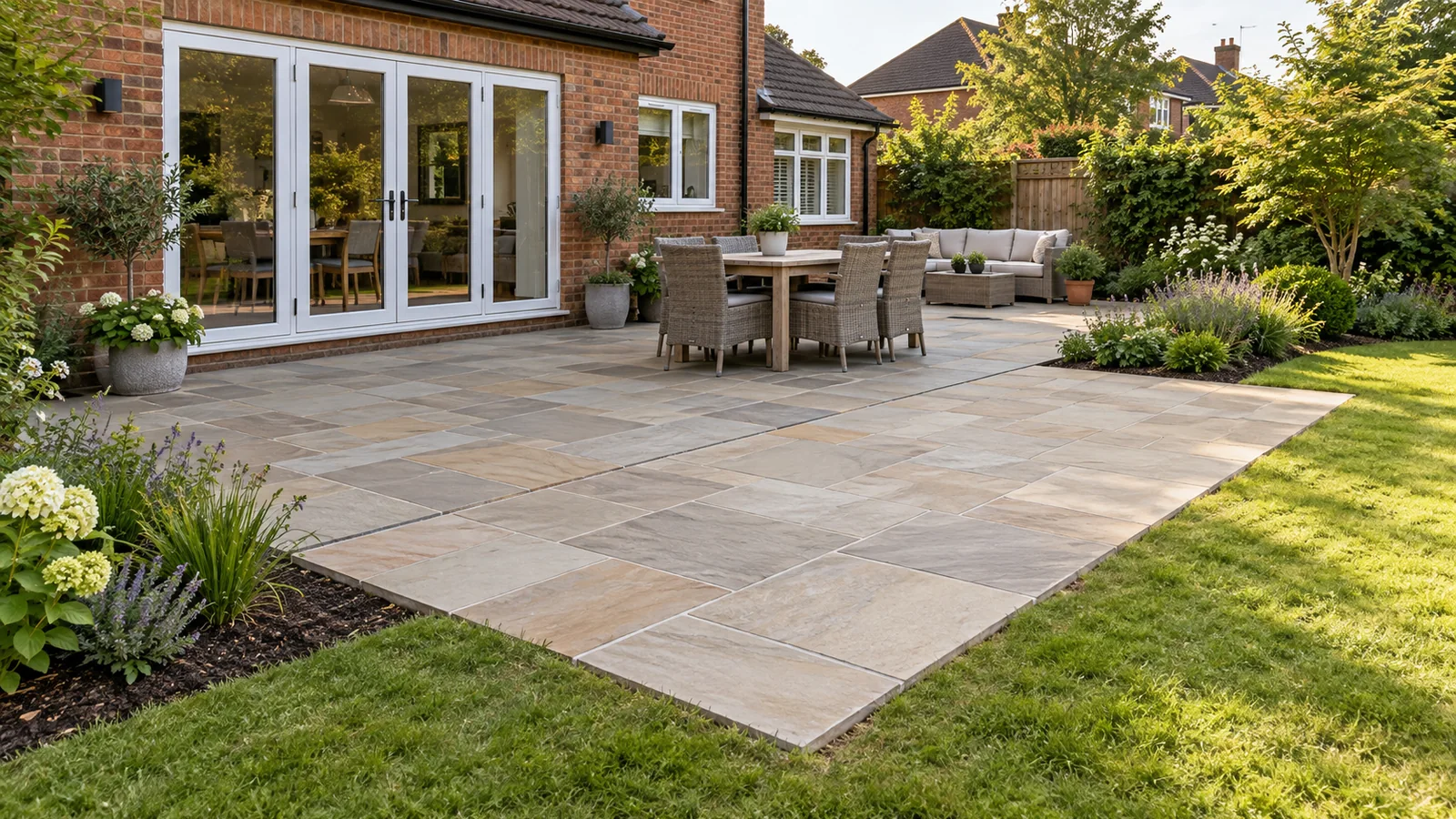
You can often extend an existing patio if the original paving is stable, the new area can be built on a suitable base and both sections can drain safely. An extension is less straightforward when slabs rock, the old surface has sunk, rainwater already pools or the new area needs substantial retaining work. In those cases, repairing or replacing more of the patio may give a better result than adding slabs at the edge.
Before choosing a finish, ask a paving contractor to inspect the old patio and the ground beside it. A close colour match is useful, but the levels, base and drainage will decide whether the two areas work together.
When an extension makes sense
Extending is worth considering when the existing patio is sound and you simply need more room for a table, chairs or a clearer route into the garden. It may also work when only a small area has settled and that defect can be repaired as part of the project. The contractor should explain where the new paving will meet the old, how the join will be finished and whether the extension can follow the existing surface fall.
If you want to explore options with patio installation specialists, describe both the current patio and the extra area you want. Mention any moving slabs or standing water so a quote does not assume the old paving is problem-free.
Check the patio you already have
Walk across the surface and look for rocking slabs, open joints, low spots and cracks. Note whether these are isolated or spread across the whole area. A few damaged slabs may be repairable; repeated movement can point to trouble in the bedding or sub-base beneath them. A new section laid properly will not cure defects in the old one.
Look at the edge where the extension would start. The contractor may need to lift some existing slabs to make a tidy connection and check how they were laid. Ask what will happen if the old construction differs from what they expected. Agree in advance whether that discovery would change the scope or price.
Plan levels and drainage together
The new surface should feel continuous underfoot, with no unexpected step or narrow lip at the join. It also needs a planned route for rainwater. Extending a patio can change where water collects, especially if the new slabs replace lawn or a lower border. Ask the installer to show the proposed finished levels and where the water will go. Check that the work will not send runoff towards the house, cover air bricks or cause problems at a neighbour's boundary.
Sloping gardens, raised patios and retaining walls call for more design work. In England, the Planning Portal's patio guidance says paving at or near ground level is generally unrestricted by area, but significant embanking or terracing may need a planning application. It also flags listed buildings and local restrictions. Planning rules differ across the UK; check with the relevant local authority if your project changes levels substantially or your property has special protections.
Decide whether to match or deliberately contrast the paving
An exact match can be difficult if the original slabs have weathered or the same batch is no longer available. Take a spare slab or clear photographs to suppliers, but compare physical samples outdoors before ordering. Check size, thickness, surface texture and joint width as well as colour. A near match that changes tone abruptly may look less convincing than a deliberate border or a different material for the new seating area.
If the old patio is uneven or its pattern cannot be continued neatly, ask for two options: an extension with a defined transition, and a larger relaying or replacement scheme. Compare the full scope, not just the cost of the new slabs. Keeping a failing section can leave you paying for repairs soon after the extension is complete.
What should an extension quote include?
Ask each contractor to price the same measured area and describe the proposed build-up. A useful written quote should state:
- how much existing paving, soil or turf will be removed and disposed of;
- the excavation, sub-base, bedding and jointing proposed for the new area;
- the exact paving product, quantity, pattern and treatment of the join;
- finished levels, drainage, edging, steps and any retaining work;
- access arrangements, protection of the house and garden, and how cutting dust will be controlled;
- VAT treatment, start date, estimated duration, payment terms and exclusions.
The HSE's advice on cutting paving explains that saw cutting can create high levels of silica dust and describes control measures. Ask how the team will manage cutting near windows, doors and neighbouring gardens.
For comparing contractors, Citizens Advice recommends written, itemised quotes that explain materials, VAT, validity and when the price may change. That page is written for England, but an agreed written scope is useful wherever you live. Check current insurance and examples of comparable patio work before accepting a proposal.
How to prepare for a patio extension survey
You do not need to specify the construction yourself. Give contractors enough information to inspect the same problem and propose a suitable solution.
- Measure and photograph the space. Mark the existing patio, the area to be added, doors, drains, borders and any change in ground level.
- Record existing faults. Note moving slabs, puddles, cracked joints and any past repairs. Photograph the patio after rain if drainage is a concern.
- Describe how you will use it. Say whether it needs to fit dining furniture, a clear walking route, steps or accessible movement between house and garden.
- Request comparable written options. Ask for an extension proposal and, where the old base is doubtful, a repair or replacement option with clear exclusions.
Frequently asked questions
Can new slabs be laid straight onto the lawn beside a patio?
No. The new area needs appropriate ground preparation and a stable construction suited to its paving and site conditions. Ask the contractor to describe the proposed excavation, base and bedding in the quote.
Will new paving match old patio slabs exactly?
Not necessarily. Existing slabs weather, and later production batches can differ. Compare outdoor samples and consider a clear border or intentional contrast if a close match looks patchy.
Should I extend a patio that already has puddles?
Find the cause first. The extension may change runoff and could make pooling worse. Ask the contractor to assess levels, the existing base and drainage before pricing a final design.
Is an extension always cheaper than replacing the patio?
No. It usually involves less new paving, but lifting old slabs, correcting levels, repairing the base or adding drainage can change the comparison. Request itemised options for the same finished area.
Ready to discuss your garden? Request patio installation quotes through Local Pros. Include photographs and the dimensions you have, and explain any drainage or level changes so contractors can assess the work properly.