
Bathroom Redesign and Remodelling Quotes
We can arrange for up to 4 local tradesmen to contact you with free, no-obligation quotes
* Required fields.
A bathroom redesign can make a surprisingly big difference to how a home feels and works. An awkward bath, poor storage, an undersized shower or badly positioned toilet can make even a fairly modern bathroom frustrating to use.
In some homes, the answer is simply replacing an old suite and freshening up the finishes. In others, a proper remodel means changing the layout, moving plumbing, installing a walk-in shower, adding better storage or creating a much more practical family bathroom.
The cost varies considerably depending on how much you change.
As a broad UK guide, a simple bathroom refresh may start from around £1,500 to £3,000, while a more complete mid-range remodel commonly costs around £5,000 to £9,000. Premium renovations, structural alterations, wet-room-style showers and high-end fittings can push the budget to £10,000 to £20,000 or more.
This guide explains what bathroom redesign and remodelling involve, the main cost factors, how long the work takes and what to compare when requesting bathroom renovation quotes.
What is the difference between bathroom redesign and bathroom remodelling?
The two terms overlap, but they can describe slightly different levels of work.
Bathroom redesign
A redesign usually focuses on improving the way the bathroom looks and functions.
It may include:
- changing the layout
- replacing the bath
- adding a larger shower
- choosing a new vanity unit
- improving storage
- changing lighting
- selecting new tiles
- replacing flooring
- improving ventilation
The redesign stage is about deciding what the finished room should look like and how everything should fit together.
Bathroom remodelling
Remodelling usually refers to the construction and installation work needed to make that design happen.
It may involve:
- stripping out the old bathroom
- moving plumbing
- changing waste pipes
- altering walls
- installing new sanitaryware
- waterproofing
- tiling
- electrical work
- plastering
- decorating
A full bathroom remodel often combines both design and construction.
How much does a bathroom remodel cost in the UK?
Bathroom prices vary widely because a small like-for-like replacement is very different from completely reorganising the room.
A useful guide is:
| Bathroom Project | Typical UK Cost |
|---|---|
| Basic cosmetic refresh | £1,500–£3,500 |
| Budget full bathroom refit | £3,500–£6,000 |
| Mid-range bathroom remodel | £5,000–£9,000 |
| Higher-spec family bathroom | £8,000–£13,000 |
| Premium remodel | £10,000–£20,000+ |
| Luxury or complex remodel | £15,000–£25,000+ |
The final price depends heavily on the specification and whether the existing layout stays in place.
What usually costs the most?
The biggest bathroom renovation costs usually come from:
- labour
- moving plumbing
- tiling
- sanitaryware
- shower installation
- structural alterations
- electrical work
- waterproofing
- making good after old fittings are removed
Keeping the existing layout can save a significant amount because the toilet, basin, bath and shower remain close to their current waste and water connections.
Why changing the bathroom layout costs more
Moving bathroom fittings sounds simple on a plan, but it can involve much more work behind the walls and floor.
For example, moving a toilet may require:
- rerouting a large soil pipe
- changing floor levels
- boxing in pipework
- altering the soil stack connection
- lifting floors
- repairing walls afterwards
Likewise, moving a shower may require new:
- hot and cold water supplies
- waste pipework
- waterproofing
- floor falls
- electrical supplies
As a broad guide, significant bathroom layout changes can add around £800 to £2,500 or more to a project, while structural work can add several thousand pounds.
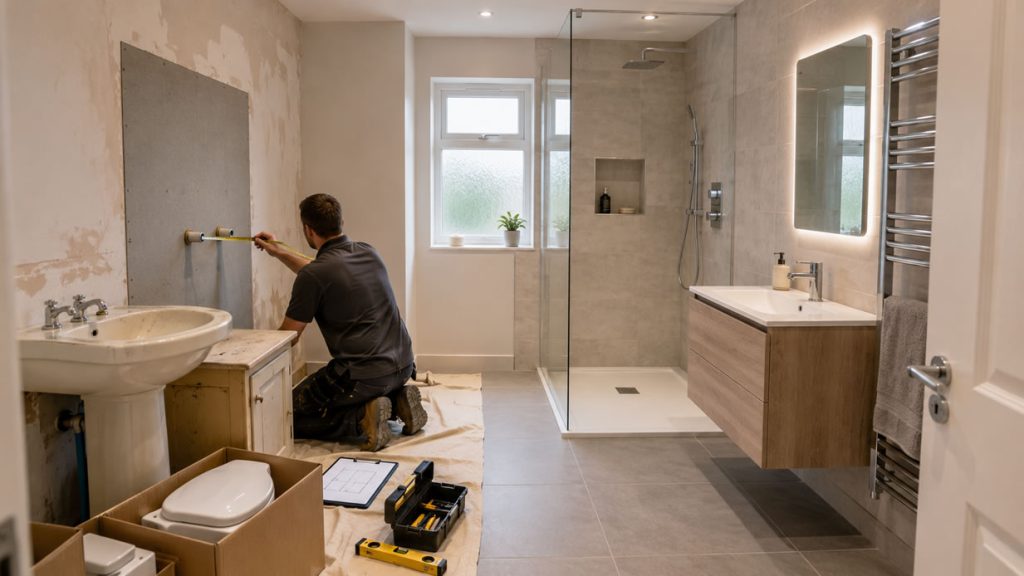
Typical bathroom remodelling cost breakdown
A quote may combine all work into one figure, but it helps to understand where the money goes.
| Part of the Project | Typical Guide Cost |
| Strip-out and waste removal | £300–£800+ |
| Basic bathroom suite | £500–£1,500+ |
| Mid-range sanitaryware | £1,500–£3,500+ |
| Bath installation | £500–£1,000+ |
| Standard shower installation | £350–£700+ |
| Walk-in shower | £1,000–£3,000+ |
| Tiling | £40–£100+ per m² fitted |
| Flooring | £300–£1,000+ |
| Electrical work | £300–£1,000+ |
| Extractor fan installation | £150–£400+ |
| Underfloor heating | £500–£1,500+ |
| Plastering and making good | £300–£1,000+ |
| Decorating | £200–£600+ |
These figures are broad estimates rather than fixed rates.
What trades are involved in a bathroom remodel?
A full redesign may need several different trades.
These commonly include:
- plumber
- bathroom fitter
- tiler
- electrician
- plasterer
- carpenter
- decorator
- builder
Some bathroom installation companies manage everything under one contract.
That can make the project easier because one contractor coordinates the trades and schedule.
Alternatively, homeowners can employ separate trades themselves. This may save money in some cases, but it involves more organisation.
Should you keep the bath?
One of the most common bathroom redesign decisions is whether to remove the bath and install a large walk-in shower.
For some households, this works very well.
A large shower may provide:
- easier access
- more usable space
- a cleaner modern appearance
- easier cleaning
- better day-to-day practicality
However, keeping at least one bath in a family home can still make sense.
Baths remain useful for:
- young children
- families
- bathing pets
- homeowners who prefer bathing
- future buyers who expect a family bathroom
If the property has more than one bathroom, converting an ensuite or second bathroom to shower-only is usually less of a concern.
Walk-in shower or standard enclosure?
Walk-in showers have become increasingly popular.
They can create a more open appearance and work particularly well in larger redesigns.
Advantages include:
- easier access
- fewer moving parts
- modern appearance
- greater shower area
- easier cleaning
However, they can cost more because the project may need:
- larger trays
- glass screens
- waterproofing
- altered drainage
- floor changes
- more tiling
A standard enclosure often costs less and may use space more efficiently in a small bathroom.
Bathroom redesign ideas for small rooms
Small bathrooms often benefit most from careful design.
Useful ideas include:
Wall-hung vanity units
These create visible floor space and can make the room feel less crowded.
Large mirrors
A large mirror reflects light and can make a compact room feel wider.
Shower-over-bath
This retains the bath without needing a separate shower enclosure.
Sliding or inward-opening shower doors
These can reduce the amount of clear floor area needed.
Wall niches
Recessed niches provide storage without projecting into the room.
Tall storage
Using vertical wall space can add storage without reducing usable floor area.
Concealed cisterns
These can create a cleaner appearance, although they require access for future maintenance.
What about removing the bath completely?
Removing the bath can create enough room for:
- a large walk-in shower
- double vanity
- extra storage
- accessible showering
- improved circulation
However, think about the wider property before deciding.
If it is the only bathroom in a family house, removing the only bath may reduce appeal to some future buyers.
In a small flat, couple’s home or property with another bath elsewhere, the decision may be easier.
Bathroom layout changes that make the biggest difference
Not every redesign needs a dramatic change.
Sometimes relatively small alterations improve the bathroom considerably.
These might include:
- moving the basin away from the doorway
- replacing a corner shower with a larger rectangular enclosure
- moving the towel radiator
- changing an inward-opening door
- installing a wider vanity
- replacing a bath with a walk-in shower
- creating built-in storage
- moving the toilet slightly to improve circulation
A good installer can often suggest practical improvements during the quotation visit.
Tiling options
Tiles can have a surprisingly large impact on both appearance and cost.
Common choices include:
- ceramic
- porcelain
- natural stone
- mosaic
- large-format tiles
- metro tiles
Ceramic tiles
Usually one of the cheaper choices and widely available.
Porcelain tiles
More dense and durable than many standard ceramics. They often cost more and may require specialist cutting.
Natural stone
Can create a premium finish, but it may need sealing and more maintenance.
Large-format tiles
These can make a bathroom look cleaner and less busy because there are fewer grout lines.
However, walls need to be particularly flat, and large tiles are more difficult to handle and cut.
Full-height or partial tiling?
You do not always need to tile every wall from floor to ceiling.
A common compromise is:
- full-height tiles in shower areas
- tiles around the bath
- splashback behind the basin
- painted walls elsewhere
This can reduce both tile and labour costs.
Full-height tiling creates a more continuous finish but increases the budget considerably.
Bathroom flooring options
Popular bathroom flooring includes:
- porcelain tiles
- ceramic tiles
- luxury vinyl tile
- sheet vinyl
- natural stone
The floor needs to cope with moisture while remaining comfortable and practical.
Slip resistance also matters, especially around showers and baths.
Waterproofing and tanking
Modern shower areas often use a waterproofing or tanking system behind the visible tiles.
This is particularly important for:
- walk-in showers
- wet rooms
- tiled shower trays
- enclosed shower areas
Tiles and grout alone should not be relied on as the waterproof layer.
A proper quote should explain what waterproofing system the installer intends to use.
Ventilation matters more than many homeowners realise
Bathrooms generate large amounts of moisture.
Without effective ventilation, steam can contribute to:
- condensation
- mould
- peeling paint
- damaged grout
- swollen furniture
- damp window reveals
A bathroom redesign provides a good opportunity to upgrade the extractor fan.
The electrician may install:
- timer-controlled extraction
- humidity-sensitive fan
- low-energy continuous extraction
- higher-capacity fan for larger bathrooms
A good fan is one of the least glamorous parts of a bathroom, but also one of the most useful.
Bathroom electrics
Bathrooms have specific electrical safety requirements because water and electricity are used close together.
Electrical work may include:
- lighting
- extractor fans
- electric showers
- illuminated mirrors
- shaver points
- underfloor heating
- heated towel rails
A suitably qualified electrician should carry out relevant electrical work.
The position and rating of fittings also need to suit bathroom electrical zones.
Underfloor heating
Electric underfloor heating has become popular in bathroom renovations.
It works especially well beneath tiled floors and can remove the shock of cold tiles during winter.
Advantages include:
- warm floors
- even heat
- no need for a large radiator
- extra comfort
However, it adds:
- equipment cost
- electrical work
- floor preparation
- thermostat installation
It is usually easiest to install during a full remodel rather than afterwards.
Bathroom storage
Storage should be considered early in the design rather than added as an afterthought.
Options include:
- vanity drawers
- mirrored cabinets
- recessed wall cupboards
- shower niches
- tall cabinets
- shelves
- built-in units
Drawers often make better use of vanity space than traditional cupboards because items at the back remain accessible.
Lighting design
A single ceiling light may technically illuminate the room, but a redesign gives the opportunity to improve the lighting considerably.
A good plan might combine:
- ceiling lighting
- mirror lighting
- shower lighting
- ambient lighting
- daylight where available
It is worth thinking about lighting before tiling begins because cables and switches are easier to position during the first-fix stage.
How long does a bathroom remodel take?
A simple replacement can take around one week.
A more complete renovation commonly takes one to three weeks, depending on complexity.
| Project | Typical Timescale |
| Simple suite replacement | 4–7 days |
| Standard bathroom remodel | 7–14 days |
| Layout-changing remodel | 10–20 days |
| Wet room | 2–3 weeks |
| Major structural remodel | 3–4+ weeks |
Delays can occur if contractors discover:
- rotten floors
- damaged walls
- leaking pipework
- poor previous plumbing
- asbestos-containing materials
- structural defects
What can increase the bathroom quote unexpectedly?
Some issues only become visible after strip-out.
Common examples include:
- rotten floorboards
- leaking pipe joints
- damaged plaster
- mould behind wall coverings
- poor electrical wiring
- inadequate ventilation
- uneven walls
- water-damaged joists
- asbestos-containing materials in older homes
For this reason, a bathroom quote should explain how unforeseen work will be charged.
Bathroom redesign for older homes
Older UK homes can create extra challenges.
These may include:
- solid walls
- old cast iron soil pipes
- uneven floors
- outdated wiring
- lead or old plumbing
- poor ventilation
- previous layers of tiles
- unusual room shapes
The remodel may therefore need more preparation than a bathroom in a modern property.
If the home was built or refurbished before 2000, contractors should also consider the possibility of asbestos-containing materials before disturbing suspect boards, flooring or textured coatings.
How to compare bathroom redesign quotes
Do not compare quotes using the final number alone.
Check whether each quotation includes:
| Quote Item | What to Check |
| Strip-out | Is removing the old bathroom included? |
| Waste | Is disposal included? |
| Plumbing | Are all pipe alterations included? |
| Sanitaryware | Who supplies the bath, WC, basin and shower? |
| Tiling | Does the price include labour and tiles? |
| Waterproofing | What system will be used? |
| Electrics | Are lighting and fan work included? |
| Flooring | Is floor preparation included? |
| Plastering | Is making good included? |
| Decorating | Who finishes painted areas? |
| Accessories | Are mirrors, rails and cabinets included? |
| VAT | Is it included in the total? |
One quotation may appear cheaper because the homeowner is expected to buy all sanitaryware and tiles separately.
Supply-only or supply-and-fit?
Some contractors offer labour only.
Others offer complete supply-and-fit packages.
Labour-only quote
You buy:
- bath
- toilet
- basin
- shower
- taps
- tiles
- vanity
- accessories
The installer provides labour and basic fitting materials.
This gives you more control over product choice.
Supply-and-fit quote
The bathroom company supplies the products and handles installation.
This can make the project easier because one company takes responsibility for:
- ordering
- delivery
- missing parts
- compatibility
- fitting
Compare both approaches on total cost rather than assuming one will always be cheaper.
Common mistakes when planning a bathroom remodel
Changing the layout without good reason
Moving every fitting can add thousands of pounds without necessarily improving the bathroom.
Buying fittings before measuring properly
A large bath or vanity may look ideal online but overwhelm the room.
Forgetting storage
Minimalist designs can look attractive until there is nowhere to put towels and toiletries.
Choosing appearance over practicality
High-maintenance finishes can become frustrating in a room used every day.
Cutting back on ventilation
A good extractor fan costs far less than repairing condensation and mould damage.
Ignoring access for repairs
Concealed toilets and pipework still need accessible service points.
Comparing quotes that cover different work
Always check the detailed specification.
Which upgrades are worth spending more on?
If the budget is limited, prioritise elements that affect performance and longevity.
These usually include:
- waterproofing
- plumbing
- shower valves
- taps
- extraction
- electrical work
- good-quality installation
You can often save money on:
- decorative accessories
- mirrors
- vanity finishes
- expensive feature tiles
- designer-branded fittings
A well-installed mid-range bathroom usually performs better than an expensive suite fitted poorly.
Can a bathroom remodel add value to a home?
A good bathroom can make a property more attractive to buyers, although the return depends on the condition of the rest of the home and the amount spent.
Practical features tend to appeal widely.
These can include:
- a good shower
- effective ventilation
- quality tiling
- useful storage
- good lighting
- sensible layout
Recent UK property guidance also suggests that keeping a bath in a family-oriented home can matter to some buyers, while walk-in showers, good ventilation, quality finishes and underfloor heating can improve perceived appeal.
Should you redesign or simply replace the old bathroom?
A like-for-like replacement may be enough when:
- the layout already works
- plumbing is in sensible positions
- the room feels spacious enough
- storage is adequate
A redesign may provide better value when:
- the shower is too small
- the bath takes up unnecessary space
- doors clash with fittings
- the basin blocks circulation
- storage is poor
- the toilet sits awkwardly
- the bathroom needs better accessibility
Sometimes spending slightly more on design produces a much more useful room without dramatically increasing the total cost.
Get bathroom redesign and remodelling quotes
Bathroom remodelling prices vary because every project includes a different mix of plumbing, tiling, electrical work, fittings and finishes.
The biggest savings often come from keeping sensible parts of the existing layout while spending more on the areas that improve everyday use.
Before choosing an installer, ask for detailed quotations showing exactly what is included.
Use the quotation form on this page to compare bathroom redesign and remodelling quotes from local bathroom fitters and renovation specialists.
Frequently Asked Questions
How much does a bathroom remodel cost in the UK?
A basic bathroom remodel may cost around £1,500 to £3,500, while many complete mid-range renovations fall around £5,000 to £9,000. Premium projects can cost £10,000 to £20,000 or more.
Is it expensive to change a bathroom layout?
It can be. Moving toilets, showers, baths and waste pipes may add around £800 to £2,500 or more, depending on the amount of plumbing and building work involved.
How long does a bathroom remodel take?
A standard bathroom remodel often takes around one to two weeks. Complex redesigns, wet rooms and structural alterations may take two to four weeks or longer.
Is it cheaper to keep the toilet in the same position?
Usually, yes. The toilet connects to a large soil pipe, so moving it can require more substantial plumbing and floor or wall alterations.
Is a walk-in shower more expensive?
Often, yes. A walk-in shower may require a larger tray, additional waterproofing, glass screens, drainage changes and more tiling.
Should I remove the bath?
That depends on the property and household. A shower-only bathroom can work well for couples and smaller homes, but retaining at least one bath may appeal more to families and future buyers.
Does a bathroom need waterproofing behind the tiles?
Wet areas should have a suitable waterproofing system. Tiles and grout should not be relied on as the only barrier against water.
How much does bathroom tiling cost?
Installed tiling may cost around £40 to £100 or more per square metre, depending on the tile, pattern, wall condition and amount of cutting involved.
Should I get more than one bathroom quote?
Yes. Comparing several detailed quotations helps you understand labour costs, product allowances and exactly what each installer includes.
Is underfloor heating worth adding?
It can be a useful comfort upgrade, particularly beneath tiled floors. Installation is easiest during a full remodel when the floor is already being lifted or prepared.
Can hidden problems increase the cost?
Yes. Rotten floors, leaking pipes, damaged walls, poor wiring and other defects may only become visible after the old bathroom has been stripped out.
What should a bathroom remodelling quote include?
A good quote should clearly cover strip-out, waste disposal, plumbing, sanitaryware, tiling, waterproofing, electrical work, flooring, making good and any agreed decoration.