
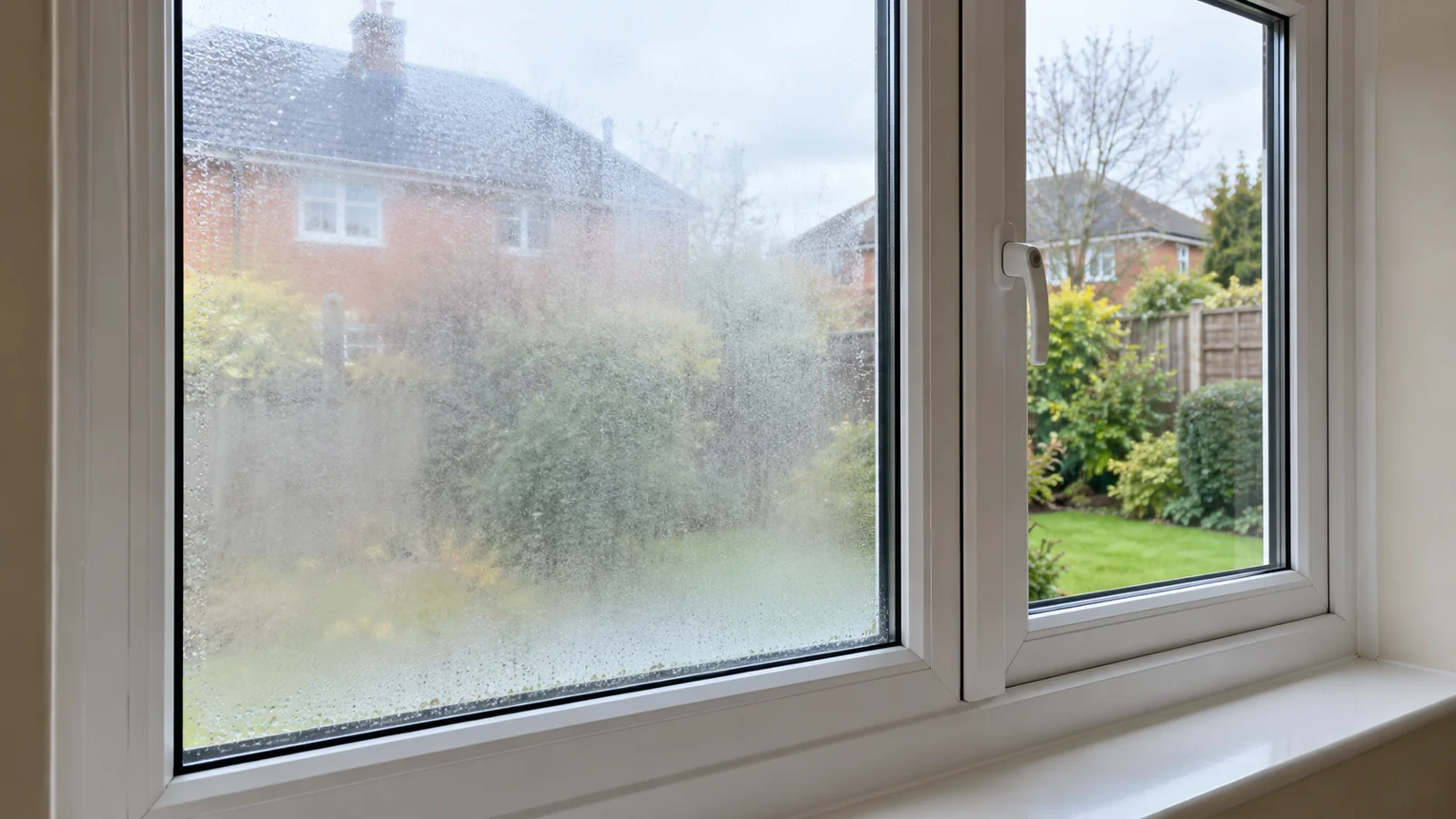
Misted double glazing can often be fixed by replacing the sealed glass unit while keeping the existing window frame. That is worth investigating when moisture is trapped between the panes and the frame, opening sash and hardware are still serviceable. Full window replacement becomes more relevant when those parts also need substantial work.
The first decision is where the moisture sits. Condensation on the room-facing surface, fog inside the sealed unit and rain entering around a frame call for different investigations. Buying new windows before establishing the cause can leave the original problem unresolved.
Is it misted double glazing or surface condensation?
Look at the affected pane from inside, at a safe standing position. Gently wipe a small area of the room-facing glass. If the moisture clears, it is on that surface. If the cloudiness remains, ask a glazier to establish whether it is between the panes; do not lean out or climb to inspect an outside face.
| What you notice | Possible explanation | Useful next step |
|---|---|---|
| Moisture wipes off inside | Room-side condensation | Review moisture sources, heating and ventilation |
| Fog remains between the panes | Failed sealed glass unit | Ask whether the unit can be replaced within the existing frame |
| Morning moisture on the outer face | External surface condensation | Observe when it clears; this alone does not establish a fault |
| Water on the sill during rain | A separate weatherproofing or drainage problem | Request an inspection of the frame and surrounding opening |
The Glass and Glazing Federation explains how condensation location changes its meaning. External condensation can occur on efficient glazing because the outside pane remains cold. It is not, by itself, a reason to order replacement windows.
For room-side moisture, use the Energy Saving Trust’s guidance on damp and condensation to understand the wider moisture problem. A new sealed unit cannot remove moisture produced by cooking, bathing or drying clothes indoors.
When can you replace just the glass?
A sealed unit is the glass assembly: typically two panes separated by a spacer and sealed around their edges. It sits within the window. Replacing it does not automatically mean removing the outer frame from the wall.
For a cloudy unit, ask the surveyor to assess the surrounding frame, the opening section and its fittings. The GGF’s repair-or-replace guidance describes replacement sealed units made to the measurements of the existing window. This supports checking a targeted repair before committing to a larger order.
Keeping suitable frames avoids unnecessary frame removal and can reduce disturbance to nearby finishes. However, the replacement unit must fit the glazing system. A glazier should confirm dimensions, unit thickness, glass specification and any safety-glass requirements for its position. Approximate homeowner measurements are for enquiries, not manufacturing.
When does a complete new window make more sense?
Consider full replacement when the survey identifies problems with the frame or opening sash that a glass change would leave behind. Examples to investigate include rotten timber, distortion, persistent closing problems or a wider combination of faults. A draught may instead need a hinge, seal or adjustment repair, so ask for the diagnosis in writing.
If you want different opening arrangements, easier access or a different frame material, a new window may also serve a broader purpose. Keep that design decision separate from the minimum work needed to clear one misted pane. Our guide to choosing glass for your windows can help you prepare questions about the specification.
Compare the scope before comparing the total
Two prices are difficult to compare if one covers a replacement glass unit and the other includes a complete frame. Request separate, clearly labelled options where both are feasible. The useful comparison is the full fitted scope for your particular openings.
- Identify each opening: room, floor, approximate size and number of affected units.
- Describe what stays: outer frame, sash, hinges, handles and surrounding finishes.
- Specify the glass: insulation specification, clear or obscure finish, and any required safety glazing.
- Include the installation: measuring visit, fitting, access equipment, waste removal and VAT treatment.
- Record additional repairs: adjustments, replacement hardware or investigation of water ingress.
- Check the guarantee: duration, exclusions, who handles a claim and which existing parts are outside the cover.
For example, a bedroom with one cloudy pane and a separate stiff opener needs two issues recorded. A quotation for the sealed unit alone should not be assumed to include correcting the opener. Equally, replacing every window in the house needs a reason beyond one failed unit.
If you are ready to seek double glazing quotes, describe whether you need an assessment of existing frames, replacement sealed units or complete windows. The linked service introduces homeowners to independent businesses; confirm availability, survey arrangements and the final specification with each responding firm.
Ask what an upgrade actually changes
A replacement unit may offer a different glazing specification, but do not assume a glass-only figure describes the performance of the entire window. The Energy Saving Trust’s windows and doors guide explains that whole-window energy assessments consider both the frame and glass. It also distinguishes improved glazing from the ventilation a home still needs.
For complete replacement, ask the installer how the work will address ventilation, any escape-opening requirements and compliance documentation for your UK nation. Check permissions before ordering if the property is listed, subject to restrictions or leasehold. Requirements depend on the property, location and work; an enquiry form is not confirmation of consent.
How to prepare for a misted-glazing survey
You need a phone or camera, a notebook and, optionally, a tape measure for approximate sizes taken safely from indoors. Keep glazing beads, sealed units and high-level inspection for the professional.
- Make an opening list. Give each affected window a room and floor location, and note which pane is cloudy.
- Record the symptoms. Note whether moisture wipes off inside, when it appears, and whether rain, draughts or difficult operation are separate concerns.
- Take useful photographs. Photograph the whole window and affected glass from a safe indoor position without removing fittings.
- Find the paperwork. Gather the original order and guarantee if available, and ask the original supplier about cover before authorising another firm.
- Request defined options. Ask the surveyor to explain whether glass replacement, hardware repair or complete replacement is appropriate, then price the agreed work in writing.
Frequently asked questions
Does one misted pane mean every window needs replacing?
No. Ask for each affected opening to be assessed. A failed sealed unit does not establish that all the frames or other glass units have failed.
Will replacing the glass cure a draught?
Not necessarily. A draught may involve seals, hinges, the opening sash or gaps around the frame. Ask the glazier to identify and price that issue separately.
Can I order replacement glass using my own measurements?
Use approximate sizes to describe the job, but have the professional responsible for the order take the final measurements and confirm the specification.
Will the new pane look exactly like the neighbouring glass?
Do not assume an exact match. Ask about coatings, tint, spacer appearance and any obscure pattern before ordering, especially when only one unit is changing.
Should I contact the original installer first?
Yes, if you have an existing guarantee. Check whether the problem is covered and whether using another contractor would affect a claim before agreeing to paid work.
Choose the smallest scope that solves the whole problem
Start with an assessment of the moisture and the condition of the window around it. Then compare written options that clearly identify retained parts, repairs and new components. That gives you a sound basis for booking a sealed-unit replacement or deciding that a complete new window is justified.
Featured image: AI-generated illustration of an imagined window, not a completed contractor project. Guidance researched on 27 October 2026.