
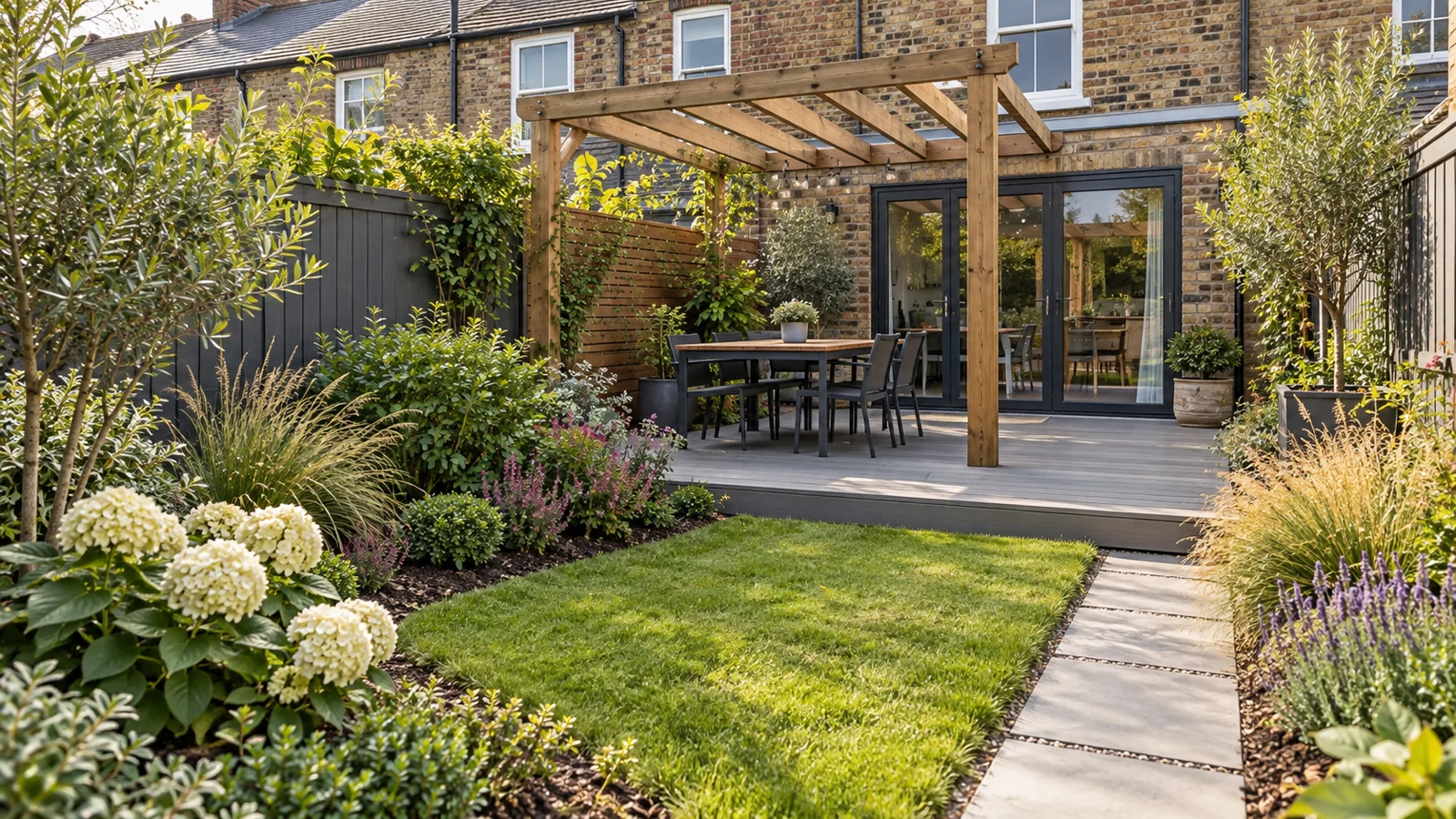
A low-maintenance garden makeover works best when it removes the jobs you struggle with while keeping the parts of the garden you enjoy. Start with the task, then choose the surface or feature: awkward mowing edges might need a simpler lawn shape, while a muddy seating area might need a properly designed deck or patio.
Replacing everything with hard landscaping is not automatically the easiest answer. Cleaning, drainage, repairs and plant care still need a place in the plan. This guide helps UK homeowners choose changes to discuss with a garden contractor, without treating any material as maintenance-free.
Identify the work you want to reduce
Write down the three jobs that most often stop you using the garden. Be specific: carrying a mower through the house, watering scattered pots or scrubbing a shaded terrace are different problems and need different solutions.
Then list what must remain. That could be a lawn for play, a favourite tree, space for washing or a border you enjoy tending. A makeover can simplify the surrounding layout without removing those useful features.
Think about the effort involved as well as how often a job happens. A surface that needs occasional heavy cleaning may be less suitable for you than planting that needs a little regular attention. Tell the contractor if bending, lifting or moving equipment is difficult so the proposal responds to everyday use.
Keep a living garden with a simpler layout
Before replacing a lawn, consider whether its shape is the problem. Tight corners, isolated patches and narrow strips around furniture make mowing fiddly. A more straightforward outline and clearly defined edges may be enough to reduce the work.
For borders, ask for a planting plan suited to the garden's light, soil and available space. Plants that outgrow their position can bring years of extra pruning. Permanent planting can also avoid the repeated buying and replanting associated with seasonal bedding.
The RHS guide to low-maintenance gardening explains how layout, plant selection and lawn care can reduce routine tasks. No planting scheme removes aftercare entirely: newly planted borders need attention while they establish.
Request a simple care schedule with the proposal. It should identify the watering needed after planting, likely pruning tasks and how the chosen mulch will be maintained. This turns a vague promise of easy upkeep into something you can assess.
Decide whether decking solves the right problem
Composite decking can make a useful seating area where you want a different feel from paving. It reduces some of the upkeep associated with timber boards, but leaves and dirt still need clearing and the surface still needs cleaning.
Compare the whole installation rather than choosing from board colour alone. Ask the installer to identify the board range, supporting frame, edges, steps and any access needed to drain covers. The frame and preparation beneath the boards belong in the quotation.
Ask for the selected manufacturer's cleaning instructions before accepting the design. A shaded deck below a tree will collect different debris from an open, sunny deck. Check that you can reach the edges and clean beneath nearby furniture without an awkward routine.
If a patio would suit the space better, compare its preparation and drainage with the deck proposal. Our guide to extending an existing patio explains the checks to make before retaining and enlarging a paved area.
Compare artificial grass with improving the lawn
Artificial grass removes mowing from the task list, but it still needs cleaning and debris removal. It also replaces a living surface, so weigh the habitat trade-offs alongside appearance and convenience.
Do not assess it only by the feel of a sample. Ask how the quotation covers excavation, the supporting base, edge restraint, joins and rainwater. Tell the contractor about pets and nearby trees, and request the cleaning guidance for the actual surface being proposed.
Compare that option with a smaller or simpler natural lawn. For example, changing a difficult strip of grass to a planted border may remove the awkward mowing section while retaining useful living lawn elsewhere. Ask for both approaches to be priced against the same layout, so you can judge what each one changes.
Treat a pergola as an outdoor living choice
A pergola can define a dining or seating area, but it does not reduce garden maintenance on its own. Choose it because it improves how you use the space, then check the care it adds.
An open structure and a roofed system offer different shelter. Ask the contractor to explain the proposed foundations, how posts fit around your furniture and what happens to rainwater if a roof is included. Cleaning access matters, particularly where leaves may collect.
Tell each firm if you plan to add a pergola later. Foundations installed after a finished terrace may require parts of the new surface to be disturbed. Agree which work should happen together and what can reasonably wait.
Resolve drainage before replacing surfaces
Record where water gathers after rain before making the layout final. Photograph recurring wet areas and note whether they are beside the house, on the lawn or near the intended seating space.
The RHS advice on waterlogging and flooding explains why prolonged saturation harms plants and why drainage needs somewhere for water to go. A new surface is not, by itself, a solution to the cause of a wet garden.
Ask the contractor to explain the water route for the proposed layout, including any roofed feature. Keep drain covers accessible. Where the cause is unclear, allow for assessment before agreeing the final construction scope rather than accepting an unspecified promise to sort it out during the work.
Compare the installation and the future upkeep
Use a short checklist when reviewing proposals:
- Does the design remove the specific task you identified?
- Are preparation, supporting structures, disposal and finishing work included?
- Can you reach the surfaces and planting that still need care?
- Are cleaning and maintenance instructions supplied for the selected materials?
- Are exclusions, allowances and the process for approving extra work written down?
- Is VAT treatment clear, and are optional items priced separately?
For early research into gardening prices, My Gardening Prices covers garden makeovers, composite decking, artificial grass and pergolas, among other services. It is a referral service connecting homeowners with independent contractors; the actual design and price need a written assessment of your garden.
Compare quotations for the same scope rather than treating a headline total as the deciding factor. A proposal that omits waste disposal, the deck frame or aftercare is not directly comparable with one that includes them. Keep a separate allowance for ongoing care, without assuming an unsupported annual saving.
How to prepare a low-maintenance makeover comparison
Before requesting proposals, gather a phone or camera, a tape measure and paper or a drawing app. Measure only areas you can reach safely; leave construction surveys and structural decisions to the appropriate professionals.
- Record the difficult jobs. List the tasks you want to reduce, how often they arise and the features you want to keep.
- Map the current garden. Sketch the seating area, lawn, borders and access route, then add photographs of shade, wet patches and drain covers.
- Ask for two workable options. Request one proposal that simplifies existing features and another that replaces the problem area, with preparation and exclusions stated for both.
- Compare care as well as price. Obtain material-specific cleaning instructions and planting aftercare, then choose the scope that fits your available time and budget.
Frequently asked questions
Do I need to remove the lawn for a low-maintenance garden?
No. A simpler lawn shape, fewer narrow strips and easier edges may reduce mowing effort while keeping space for play or relaxation. Ask the contractor to compare improving the existing lawn with replacing part of it.
Is composite decking maintenance-free?
No. It still needs cleaning and debris removal. Ask for the chosen board manufacturer's instructions and check that the proposed layout allows access for those tasks.
Should I install a pergola before finishing the seating area?
Discuss the full plan before either job starts. The contractor can assess whether foundations and other preparation should happen together to avoid disturbing finished paving or decking later.
What should I ask about a makeover quotation?
Ask what preparation, disposal, supporting structures, drainage assessment and aftercare are included. Confirm exclusions, VAT treatment and how you will approve unexpected additional work.
Take the next step with a clear brief
Choose the upkeep problem you want to solve first, then request a proposal that shows how the new layout addresses it. Use our garden landscaping brief guide to organise your measurements, priorities and questions before approaching contractors.