
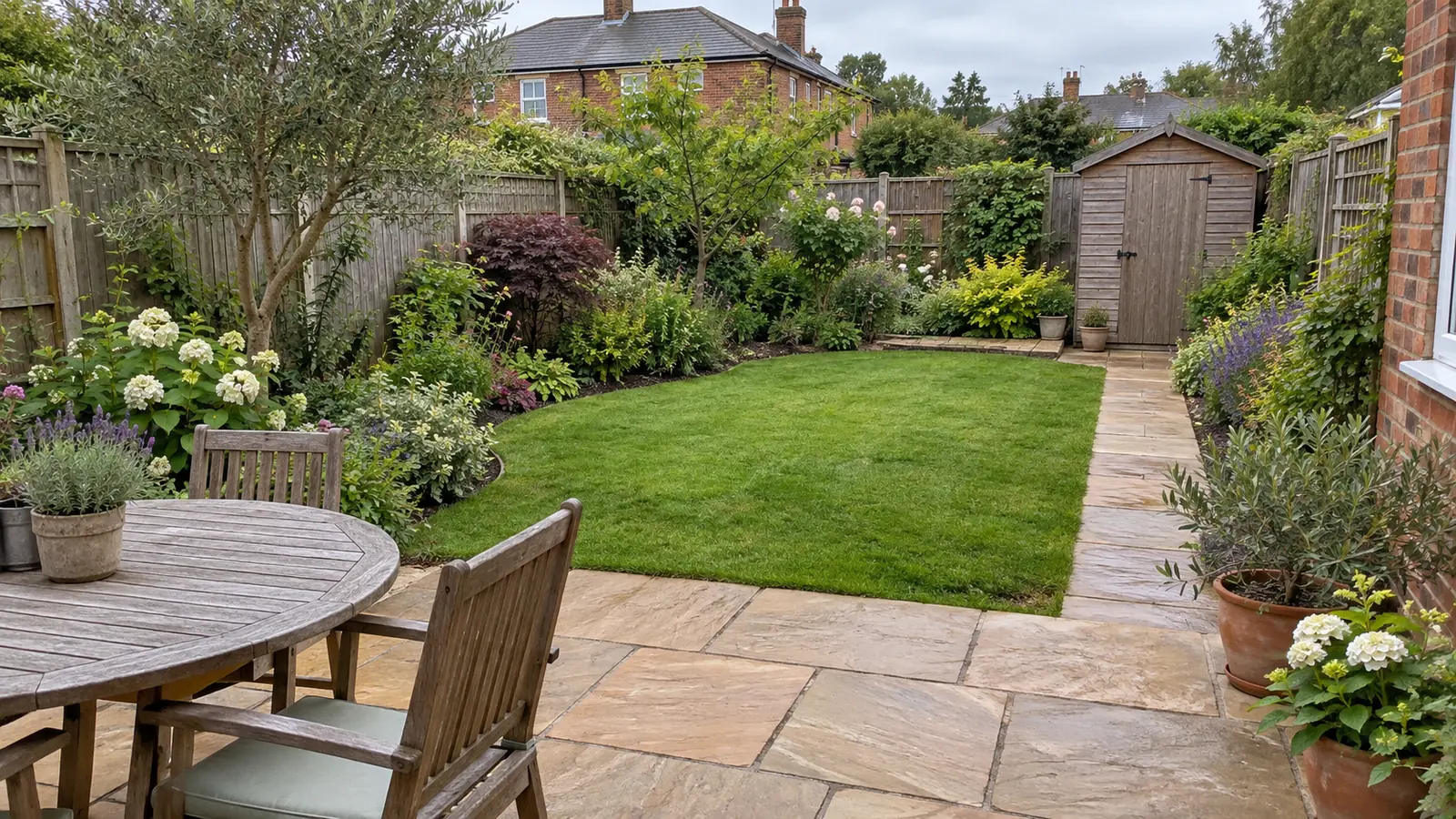
A useful garden landscaping brief explains how you want to use the space, what already causes problems and which features must stay. You do not need to arrive with a finished design. Give each contractor the same priorities, site information and budget expectations, then ask them to explain the preparation as well as the finished appearance.
This guide is for UK homeowners planning several connected changes, such as a new seating area, replacement lawn, planting and better access. It helps you turn a loose idea into a clear enquiry and compare proposals before booking the work.
Start with the problems you want to solve
Describe an ordinary day in the garden. Where would you eat outside? Can you reach the shed without walking across wet grass? Is there enough room to move a mower through the gate? These questions usually reveal more than a collection of attractive photographs.
Write down three priorities and separate them from optional extras. For example, a dry route to the shed, space for a dining table and keeping an established tree might be essential. Decorative lighting or a second seating area could wait. This gives a contractor room to suggest a practical layout without guessing what matters most.
Include the people who will use the garden. Mention children, pets, visiting relatives and any access requirements. Describe the task that is difficult, such as carrying shopping through a narrow passage, rather than simply asking for an accessible garden. A suitable design depends on the actual user and site.
Record the garden you already have
A sketch does not need to look professional, but it should show the house, doors, boundaries, shed, existing paths, trees and any features you want to retain. Add approximate measurements and label them as approximate. Contractors should verify dimensions before ordering materials or pricing a final specification.
Photograph the whole space from several positions, including the route from the street. Note sunny and shaded areas, exposed corners and places where water gathers after rain. If you have photographs from wetter months, include those too; a dry site visit may hide a recurring problem.
The RHS guide to creating a garden plan explains how to map existing features and produce a scale drawing. Even a simple initial record helps everyone discuss the same space.
Avoid digging exploratory holes to find buried services. Tell the contractor about known cables, pipes, drains and inspection covers, and ask how they will check service positions before excavation.
Agree what stays, changes or goes
Mark retained features clearly. A sound fence, established planting or usable paving can influence the design and the order of work. Ask how the contractor will protect them while moving machinery, storing materials and removing spoil.
Then list what you want removed. An old lawn, unwanted shrubs, broken paving and a redundant shed are separate tasks with different handling requirements. Do not assume that clearance, disposal or making good the access route is included simply because the quote says landscaping.
If your main question is whether existing paving can form part of the new layout, read our guide to extending an existing patio. It covers the checks that help decide whether to retain the old surface or replace it as part of the wider project.
Discuss ground conditions before choosing finishes
The attractive parts of a proposal are easy to compare. Ground preparation is less visible, but it deserves its own explanation. Ask what the contractor has observed, what needs further investigation and which assumptions their price depends on.
A garden with puddles does not automatically need the same drainage system as the garden next door. Soil, compaction, existing levels and the route water takes all matter. The RHS advice on waterlogging and flooding describes several causes and approaches. Give a contractor evidence of the problem and ask them to explain their proposed remedy.
Do not request a soakaway or land drain solely because it appears in a photograph or another quotation. Ask where water would go and why the solution suits your plot. Drainage and changes to levels should be assessed before a new lawn or finished surface is installed.
For slopes, describe the result you want: an easier route, a usable seating area or fewer awkward mowing sections. Whether that calls for modest reshaping, separate terraces or more substantial construction needs a site assessment. Ask the contractor to identify any specialist design or permissions checks needed for their proposal.
Be specific about maintenance
Low maintenance means different things to different households. Explain which jobs you are willing to do and which you want to reduce. You might enjoy planting but dislike frequent mowing, or be happy to prune a few shrubs while wanting fewer pots to water.
Ask for a planting proposal that identifies the plants, their expected mature size and their aftercare. A border can look spacious at installation yet become crowded as plants grow. New planting also needs establishment care even when the long-term design is intended to be easy to manage.
The RHS low-maintenance gardening guide recommends thinking about future upkeep during design and choosing plants that fit the available space. No garden is completely maintenance-free. Ask what you will need to do during the first growing season and in later years.
Set a budget and ask for useful alternatives
Tell the contractor your overall budget and whether it includes design, clearance, waste removal, materials, labour and VAT where applicable. A budget is a constraint for the proposal, not a substitute for a written quotation.
Ask for the essential work to be priced separately from optional features. If the whole scheme is beyond your budget, compare a simpler design with a properly planned phased project. Completing one area now can be sensible, provided later work will not require heavy machinery to cross it or undo new drainage and paving.
For example, a homeowner might prioritise ground preparation and a reliable path, then add more planting later. That is an illustrative sequence, not a recommendation for every garden. Ask the contractor to explain dependencies and the extra visits or temporary protection involved.
Compare the scope, not just the total
Give each firm the same brief. If one proposal changes the layout or materials, ask for those differences to be highlighted so you can judge the alternative fairly.
A useful written quotation should make these points clear:
- Design responsibility: who prepares the layout, planting plan and any specialist details, and whether those services are included.
- Preparation: what is being cleared, excavated, retained, improved or investigated before installation.
- Materials: the specified paving, edging, fencing, turf and plants, including quantities or areas where appropriate.
- Access and waste: how materials reach the garden, where they are stored and what leaves the site.
- Completion: the agreed finish, clean-up, aftercare information and any follow-up included.
- Commercial terms: VAT treatment, exclusions, payment stages and how additional work will be agreed in writing.
Ask about experience with projects involving similar ground conditions and access restrictions. Request current insurance evidence and clarify which business you will contract with. If several trades are involved, identify who coordinates them and who handles problems between stages.
How to prepare your garden landscaping brief
You will need a phone or camera, a tape measure used from safe positions, paper or a simple drawing app, and your list of priorities. This is preparation for a professional survey; approximate measurements do not replace the contractor's assessment.
- Write the outcome. List three essential improvements, the features you want to retain and any optional extras. Include how the household uses the garden.
- Record the site. Sketch the layout, take photographs and note approximate dimensions, access restrictions, known services and recurring wet areas. Do not excavate to investigate hidden services.
- Set the constraints. State your overall budget, preferred timing, maintenance expectations and whether you are open to completing the work in phases.
- Request comparable proposals. Send the same brief to each contractor, arrange a survey where needed and ask for preparation, materials, exclusions and payment terms in writing.
Frequently asked questions
Do I need a finished garden design before asking for quotes?
No. You can start with a description of your priorities, a sketch and photographs. Ask whether design is included in the contractor's service or charged separately, and agree who will turn the initial ideas into a buildable specification.
Can I landscape the garden in stages?
Yes, if the stages are planned together. Ask how access, drainage and ground preparation affect the sequence, and whether later work would disturb completed areas. Get the scope and price for each proposed phase in writing.
Should I replace the lawn before dealing with wet ground?
Ask for the cause of persistent wet ground to be assessed first. New turf does not resolve an underlying drainage or compaction problem, and later remedial work could disturb the new lawn.
What should I send with my first landscaping enquiry?
Send your postcode, priorities, approximate garden size, photographs and details of the access route. Include retained features, known problems, your budget expectations and whether the project needs to be phased.
Turn the brief into a landscaping enquiry
Once your priorities and site notes are ready, you can contact garden landscaping specialists through Get Gardener Prices. The website provides an introduction service for enquiries covering landscaping and related garden work; the independent contractor you choose provides the quotation and carries out the job.
Use the same brief for every conversation. Before accepting a proposal, make sure it explains what will happen below the finished surface, who is responsible for each stage and how the garden will be handed over.