
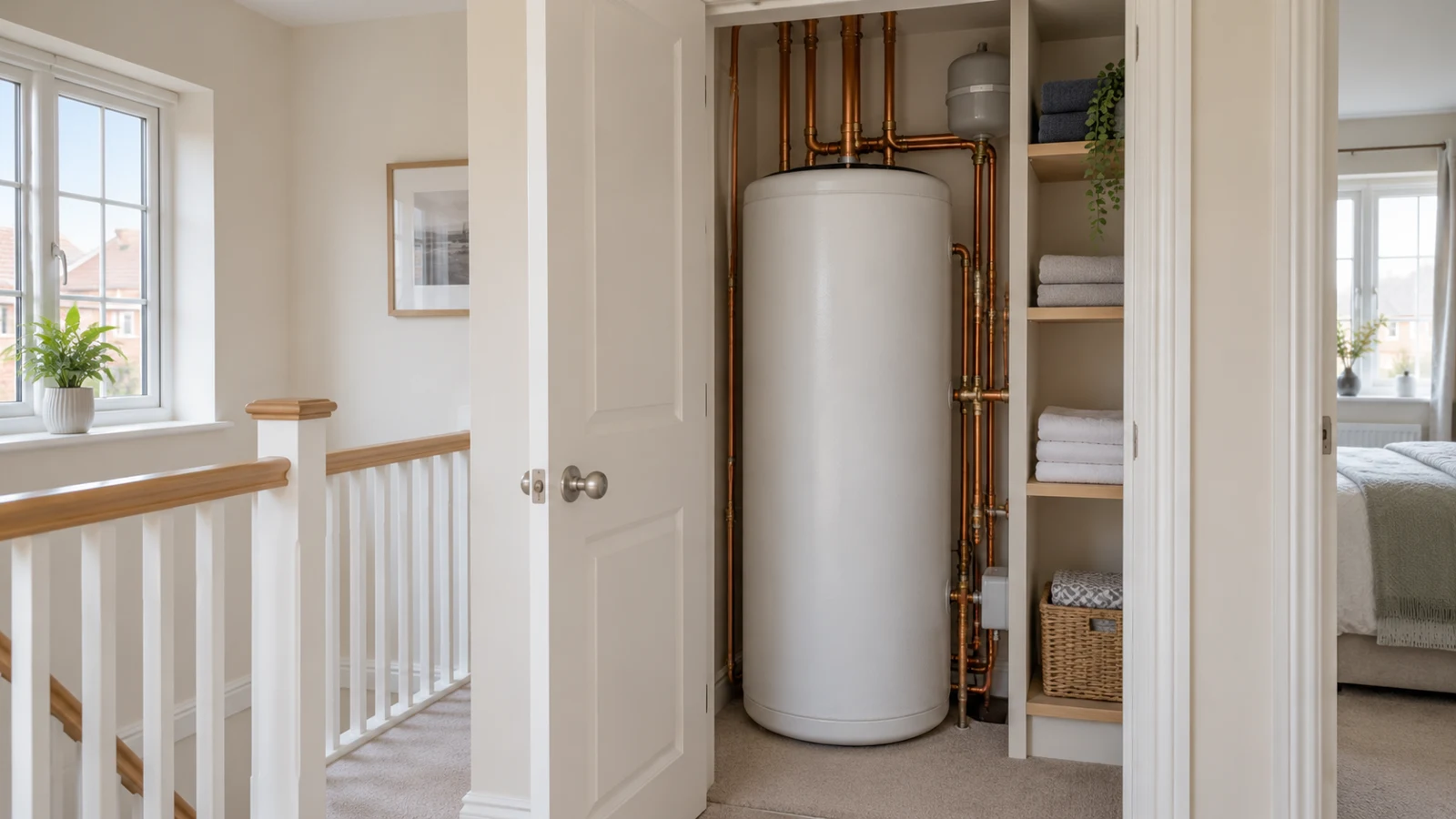
When replacing your boiler, keeping the hot-water cylinder can be sensible if your household needs several hot taps or showers at once. Switching to a combi can free up cupboard space, but only if the incoming water supply and the proposed boiler can meet your needs. The useful comparison is between two complete installation plans, rather than two appliance prices.
Before agreeing to remove the cylinder, ask an engineer to assess your water supply, existing showers and daily routine. This guide explains what to put in that survey brief and how to compare the resulting quotations.
Featured image: AI-generated illustration of a hot-water cylinder in a domestic cupboard.
Keep the cylinder or switch to a combi?
A conventional or system boiler works with a separate hot-water cylinder. A standard combi heats water as you need it, without that separate store. The Energy Saving Trust’s boiler guide highlights hot-water demand and water pressure as important reasons why a combi may not suit every home.
A spare bedroom is a poor measure of hot-water demand. Two people using showers together can place different demands on a system from a larger household with staggered routines. Tell the engineer what happens on a busy morning, including bath filling and kitchen use.
| Your priority | Option to investigate | Question for the survey |
|---|---|---|
| Several hot-water outlets used together | Retaining a cylinder-based system | Is the existing storage capacity and recovery suitable? |
| Recovering cupboard space | A combi conversion | Can the measured supply support our normal use? |
| Limiting disruption | Replacing the boiler while retaining suitable components | Which parts can remain, and which need attention? |
| An imminent bathroom alteration | Designing around the proposed outlets | Have the new shower and bath requirements been included? |
These are starting points for a survey, not automatic recommendations. Our explanation of conventional boiler advantages and disadvantages provides background if you are unsure what you have now.
Three checks before removing the cylinder
1. Measure the supply under working conditions
Ask for the incoming mains flow and dynamic pressure to be assessed. Dynamic pressure means pressure while water is flowing. A tap that looks powerful in isolation does not establish how the system will perform when other outlets are open.
Worcester Bosch explains that mains-fed hot-water performance depends on adequate pressure and flow. Ask the installer to record the measurements and explain how they support the proposed appliance. A higher boiler rating is not evidence that a restricted incoming supply has been resolved.
2. Identify the showers you intend to keep
Give the engineer the make and model of each shower where available, including any separate pump. Do not assume that a shower which works well with your cylinder can simply be connected to the new arrangement.
Worcester Bosch specifically advises that existing showers should be examined for suitability during a combi conversion. Have any adaptation or replacement included in the quote before accepting it. Otherwise, the heating work and bathroom work can become two separate bills.
3. Agree what happens to the old equipment
“Cylinder removal” needs a clear scope. Ask which tanks, controls and pipe runs become redundant, which will be removed and which will remain safely disconnected. Include access to the loft or cupboard, waste removal and the condition in which the room will be left.
The manufacturer’s conventional-to-combi conversion guide describes additional work beyond a boiler swap. Your quotation should turn that general process into a plan for your own home. Cupboard shelving, boxing, plaster repairs and decoration should be listed separately if they are outside the heating contractor’s work.
Compare the complete job, including what stays
When researching gas boiler prices, distinguish a replacement using the existing system from a conversion that removes stored hot water. Boiler Prices covers both types of work and introduces homeowners to independent heating businesses; the final scope still needs to be agreed with the installer.
Ask for two clearly labelled options if both approaches are viable. For a retained-cylinder option, request confirmation of its condition and suitability, with any recommended repairs or replacement priced separately. For a combi conversion, ask for all associated plumbing and shower work to be included.
- Equipment: exact boiler model, controls and any replacement cylinder or shower components.
- Connections: the proposed gas supply, flue and condensate arrangements, with changes identified.
- Existing heating: assessment of radiators and pipework, and the proposed cleaning and water-treatment work.
- Removal and finishes: redundant equipment, waste disposal, access work and making good.
- Completion: commissioning, controls demonstration, warranty registration and applicable installation paperwork.
- Price and terms: total payable, VAT treatment, exclusions, provisional allowances and payment stages.
For example, one quotation might include removing the cylinder and repairing the cupboard wall, while another allows only for disconnection. Write those differences beside the totals before deciding which is better value. This guide does not give a national installation price: a survey is needed to establish which job you are actually buying.
Ask how long heating and hot water will be unavailable, and whether the proposed schedule depends on another trade. If the work coincides with a bathroom refit, agree who is responsible for checking the finished shower works correctly.
How to prepare a boiler replacement survey brief
You need a notebook or phone and any existing manuals or service records. No tools or access inside the boiler are needed. Only photograph equipment you can reach safely; leave testing, covers and pipework to the engineer.
- Record what is installed. Note the boiler model, cylinder location, visible controls and shower details from accessible labels or documents.
- Describe your hot-water routine. List which showers, baths and taps you use together and any current shortcomings.
- State your planned changes. Explain whether you want cupboard space, another bathroom or less disruption, and separate essentials from preferences.
- Request comparable written options. Ask the engineer to explain the suitability of retaining the cylinder and converting to a combi, including exclusions and the expected interruption to services.
Use a suitably qualified Gas Safe registered engineer for gas boiler work. Follow HSE’s guidance on checking an engineer to verify their identity and relevant qualifications. A referral or quotation does not replace that check.
Frequently asked questions
Does replacing the boiler mean replacing the cylinder?
Not automatically. Ask the engineer to assess whether the existing cylinder is suitable for the proposed boiler and your hot-water needs. Have any recommended cylinder work identified separately in the quotation.
Will removing the cylinder leave a finished storage cupboard?
Only if that work is agreed. Confirm pipe removal, wall and floor repairs, decoration and shelving separately; removing heating equipment does not necessarily include those finishes.
Can I choose a combi from the number of bedrooms alone?
No. Explain your simultaneous hot-water use and planned bathroom changes, and ask the installer to assess the incoming water supply before recommending a model.
Should I choose the cheapest boiler-only offer?
Compare the total installed scope first. An appliance offer may exclude conversion work, shower changes, waste disposal or making good, so it is not directly comparable with a complete installation quotation.
Start with a survey brief, then compare the options
Write down what works in your current system and what you want to improve. Use the linked boiler quotation service to request an assessment, then compare written proposals against that same brief. Make the cylinder decision once the engineer has explained the supply checks, practical changes and complete installed scope.