
A good driveway installation checklist starts with how you will use the space, where rainwater will go and what needs to happen beneath the finished surface. Decide those points before booking an installer. They shape the specification, help you compare quotations and reduce the chance of paying for changes once work begins.
The colour of the paving matters, but so does being able to open the car doors, wheel a bin past a parked vehicle and reach the front door comfortably. This guide walks through seven decisions for UK homeowners planning a new or replacement driveway, followed by a practical way to prepare a brief for local contractors.
Guidance checked on 29 September 2026. Planning advice below identifies the position in England; check the relevant local authority for projects elsewhere in the UK.
1. Plan the parking and walking space
Start with the vehicles and people who use the driveway. A layout that looks generous when empty may feel cramped with two cars parked, a delivery at the door and bins waiting for collection.
Measure the area you want surfaced and mark the proposed parking positions. Use your actual vehicles to check door opening and boot access. Allow for a comfortable route to the entrance, including any wheelchair, pushchair or mobility needs. Ask whether a future larger car or charging point would change the arrangement.
- Keep access to the front door, meters and inspection covers usable.
- Check whether gates can open fully with a vehicle parked.
- Retain planting where it makes the space attractive and supports the drainage design.
- Discuss how the driveway meets the pavement without creating an awkward step.
A quick sketch is useful; the installer should take accurate measurements and confirm levels during a site visit. If the work involves a new vehicle crossing or changes to an existing one, establish the council’s requirements before treating that area as part of the driveway contract.
2. Choose a surface that suits your priorities
Choose the finish around appearance, upkeep, access and the construction your site needs. Ask to see recent examples of the proposed material, ideally installations that have been in use for a while. A small sample helps with colour, but cannot show the whole effect of a broad paved area.
| Surface | Potential advantage | Trade-off to discuss |
|---|---|---|
| Block paving | Choice of patterns and the option to lift individual blocks for access or repairs. | Joint maintenance, edge restraint and whether the quoted system is conventional or permeable. |
| Resin bound | A continuous aggregate finish with no loose gravel when correctly installed. | The required base, surface specification and maintenance; permeability depends on the complete construction. |
| Gravel | A flexible appearance that works well alongside planting. | Stone migration, replenishment and suitability for wheelchair routes or steep sections. |
| Asphalt | A continuous surface that can suit a straightforward parking layout. | Edge detailing, access to buried services and how repairs would be finished. |
| Concrete | A choice of plain or decorative finishes. | Joint design, drainage, visible repairs and the proposed finish’s slip resistance. |
None of these options is automatically the right choice for every property. A smooth finish may suit wheeled access, while someone prioritising repair access may prefer removable blocks. Keep the practical requirements alongside your preferred look.
3. Agree what happens beneath the surface
Ground preparation is easy to overlook because you cannot see it when the job is complete. Ask the installer to describe what will be removed, what can remain and how the new construction will support the vehicles using it.
An existing surface does not prove that the base below it is suitable. Settlement, movement or repeated puddling need investigation before an installer recommends covering it. Ask what evidence supports any proposal to retain the existing base and what happens if excavation reveals soft ground.
The Marshalls concrete block paving installation guide explains that pavement design depends on ground conditions and vehicle loading. It also separates sub-base construction from the laying course. Your quotation should make the proposed build-up clear; a generic promise of a “proper base” gives you little to check.
Confirm excavation, sub-base materials and compaction, surface specification, and finished levels beside the house. Ask the contractor to identify any services or inspection covers affected. Leave excavation and construction design to a competent installer, particularly around buried utilities and building foundations.
4. Resolve drainage and permissions before booking
Ask one simple question: where will rainwater go when the driveway is finished? “We will fit a drain” is incomplete unless the contractor explains where it discharges and why that arrangement suits the property.
A permeable surface needs a compatible construction beneath it. Conventional block paving should not be assumed to perform like a designed permeable system. Equally, a resin bound finish does not make an impermeable underlying base disappear. Ask for the whole drainage arrangement, including falls, collection points and the proposed destination for water.
In England, the government guidance on front garden surfacing explains that planning permission is generally needed for more than 5m² of impermeable front garden surfacing where water is not directed to a permeable area within the property. Permeable surfacing, or suitable drainage to a lawn or border, can meet the relevant condition for permitted development.
Other restrictions can still apply. Check with the local planning authority where rights have been restricted, the property has special protection or the proposal involves other building work. Do not assume England’s rule applies unchanged in Wales, Scotland or Northern Ireland. A dropped kerb also needs the relevant highways authority’s approval; agreeing a driveway quote does not grant that approval.
5. Specify edges, covers and adjoining areas
Small finishing decisions can make a large difference to the finished space. Agree the border colour and width, how the surface meets paths and steps, and which existing features are being retained. Put these details in the specification before work starts.
For block paving, edge restraints help contain the paved area. Inspection covers need to remain accessible, and any replacement cover must be suitable for its position and loading. Ask how the contractor will avoid awkward cuts, trip points and drainage obstructions around these features.
Include repairs to planting borders, gates or adjacent surfaces disturbed by the work. If an electric vehicle charging cable or other service is planned, raise it now so the relevant trades can coordinate their work. Do not let a paving contractor make electrical decisions outside their competence.
6. Compare the complete driveway installation price
Once you have a clear brief, a driveway installation price enquiry can help you approach specialists for quotations. Treat any online indication as a starting point: a site visit and a written scope are needed to understand the cost for your property.
Compare totals only after checking that the contractors have priced the same area, preparation, surface and drainage. Ask each installer to show whether the following are included:
- Removal of the old driveway, excavation and disposal.
- The specified sub-base, laying system and surface materials.
- Edging, drainage, inspection covers and making good.
- Access arrangements, deliveries and any necessary permits.
- VAT, where applicable, and all stated exclusions.
A price per square metre can be useful, but check what it covers. A surface-only figure cannot fairly be compared with a price for removal, rebuilding and drainage. Smaller or difficult sites may also have fixed costs that do not scale neatly with area.
For example, imagine two quotes for the same driveway. One includes excavation, a specified base, new edging and drainage; the other describes only “supply and lay paving”. The second quotation needs clarification before you can decide whether it offers better value. You do not yet know whether those contractors are offering the same job.
Waste removal should be explicit. Ask who is collecting the excavated material and where it will go. GOV.UK’s waste disposal guidance explains that waste produced by a tradesperson during construction is business waste and that the tradesperson is responsible for disposing of it correctly. It also explains how to check a private carrier when you arrange household waste removal yourself. Keep the contractor’s waste arrangements with your project records.
7. Agree access, payments and handover
Before accepting a quotation, confirm the proposed start date, expected duration and what could delay the job. Discuss where vehicles will park during the work and how people will reach the house safely. Ask when you can walk and drive on the finished surface; the answer depends on the chosen system and site conditions.
Agree payment stages and a written process for changes. If unexpected ground conditions are found, the contractor should explain the proposed extra work and its price before proceeding. Check public liability insurance and ask what any workmanship guarantee covers, who provides it and how problems should be reported.
At handover, walk around the driveway with the installer. Check the agreed edges and covers, drainage details, obvious uneven areas and any making good. Obtain care instructions, product details and guarantee paperwork. A tidy finish is welcome, but it should be accompanied by a clear explanation of what was installed.
How to prepare your driveway installation brief
You will need a tape measure, a phone camera and a notebook or simple document. This is a preparation exercise for obtaining quotes; it does not involve digging, lifting covers or checking buried services yourself.
- Record the space and how you use it. Note approximate dimensions, vehicles, walking routes and access needs. Let the installer verify all measurements.
- Photograph the existing condition. Capture the whole driveway, entrances, edges and any puddles or settled areas you have observed.
- List your preferred finish and essentials. Separate preferences such as colour from requirements such as accessible walking space and retained planting.
- Ask for a site visit and written construction proposal. Request details of preparation, levels, drainage, permissions and any uncertainty about the existing base.
- Compare quotations against the same brief. Clarify VAT, exclusions, waste removal, payment stages and changes before choosing a contractor.
Send the same brief to each contractor. It helps them ask useful questions and makes differences between their proposals easier to spot.
Frequently asked questions
Can a new driveway be laid over the existing surface?
Sometimes, but only after an installer checks the condition, stability, levels and drainage of the existing construction. An overlay should not be used to hide unresolved settlement or drainage problems. Ask why retaining the old surface is appropriate for your proposed system.
Is all block paving permeable?
No. Conventional block paving and designed permeable block paving are different systems. Ask which product is specified and how the joints, laying course, sub-base and drainage arrangement work together.
Should a driveway quotation include VAT?
The quotation should state clearly whether VAT applies and whether the total includes it. Ask for the full amount payable so that quotations from different businesses can be compared consistently.
Who arranges permission for a dropped kerb?
Confirm this with the contractor and your local highways authority before booking. The authority controls approval and may restrict who carries out the work. Do not assume a driveway installer can alter the public pavement as part of the job.
What paperwork should I keep after installation?
Keep the agreed quotation and specification, approved changes, invoices, care instructions, product details and any guarantee. Retain relevant permission documents and waste arrangements with the same project record.
Ready to discuss your driveway?
Use the checklist to decide what you need, then arrange site visits with suitable local installers. Local Pros’ driveway paving quote service provides a relevant starting point. If you prefer a continuous asphalt finish, see its asphalt driveway installation service. Ask each contractor to price the same written brief and explain the work beneath the surface as carefully as the finish you will see.
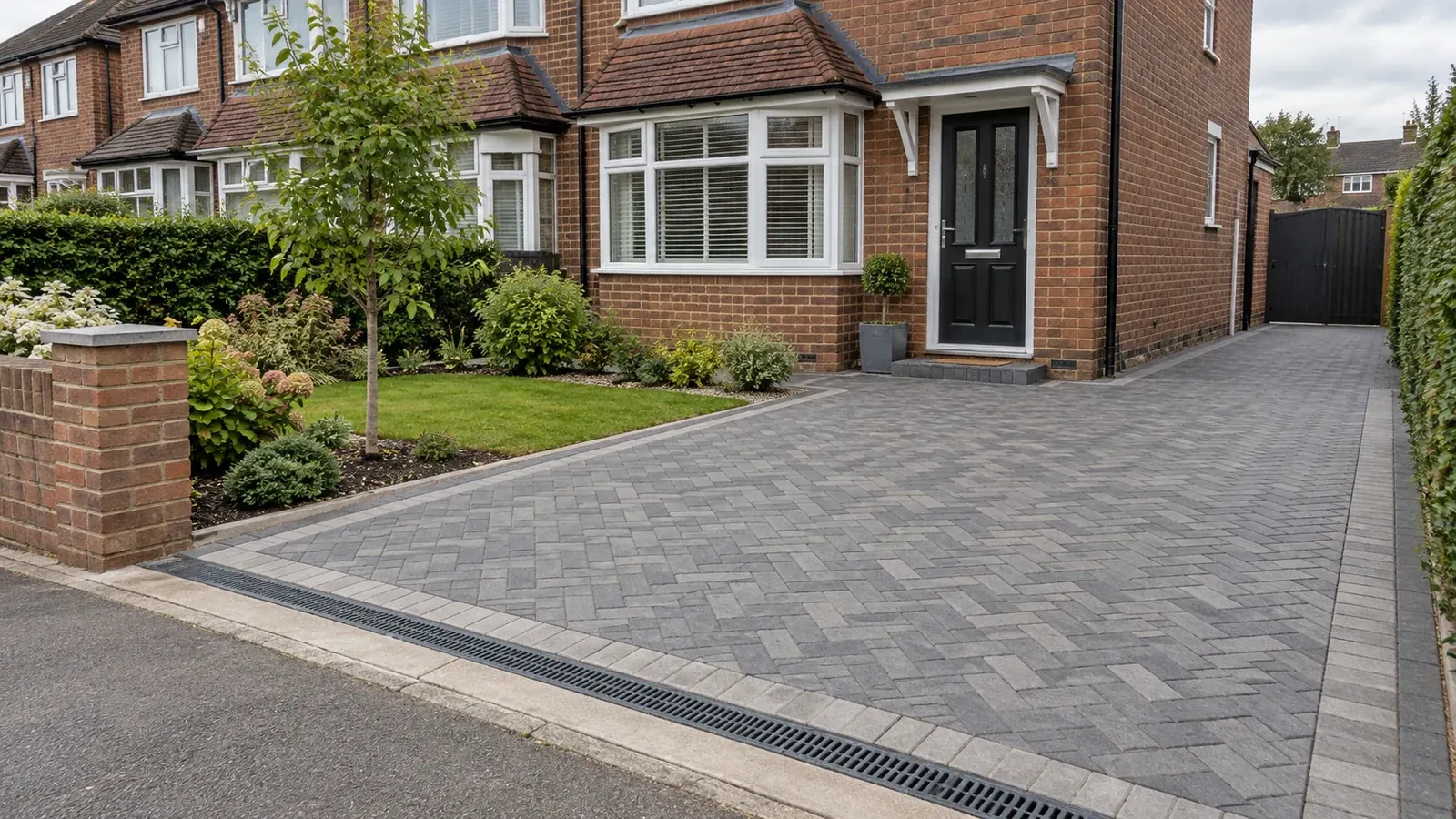
The featured image is an AI-generated illustration of a generic driveway, not a photograph of a completed Local Pros project.