
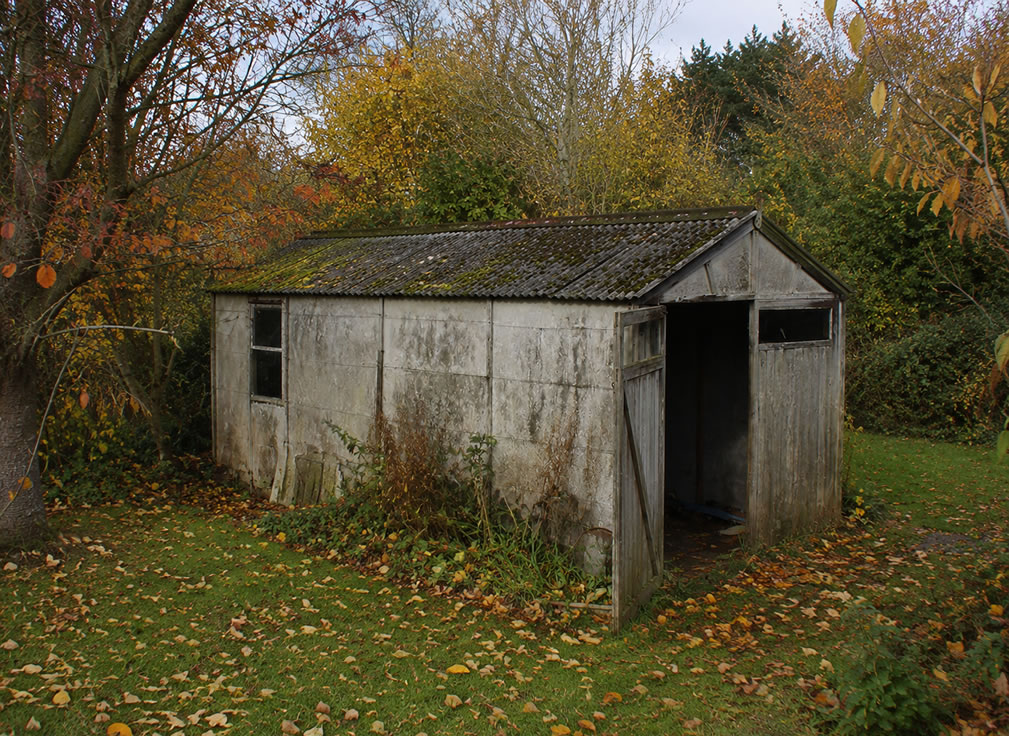
Many older garden sheds, workshops and outbuildings have corrugated cement roof sheets. Some of these sheets contain asbestos, particularly where the building dates from the middle or later decades of the twentieth century.
An asbestos cement shed roof does not necessarily create an immediate emergency. When the sheets remain intact and nobody disturbs them, they generally release far fewer fibres than softer asbestos-containing products. However, drilling, sawing, sanding, pressure washing or breaking the sheets can release harmful asbestos fibres.
Therefore, homeowners should identify the roofing material before starting repairs, installing new fixings or dismantling the shed.
This guide explains what asbestos shed roofing looks like, how specialists confirm it, when homeowners may leave it in place, what professional removal involves and which materials can replace it.
What is an asbestos cement shed roof?
Asbestos cement combines cement with asbestos fibres. Manufacturers used the fibres to strengthen the finished product and improve its resistance to heat and weather.
Common asbestos cement products included:
- corrugated roof sheets
- flat roof panels
- wall cladding
- gutters
- downpipes
- flue pipes
- water tanks
- roofing slates
Corrugated sheets appeared frequently on sheds, garages, workshops, agricultural buildings and prefabricated outbuildings.
The UK banned the use and supply of asbestos in 1999. However, asbestos may still exist in buildings and structures constructed or refurbished before 2000.
Is an old corrugated shed roof definitely asbestos?
No. Several non-asbestos materials can look similar, including modern fibre-cement sheeting.
You cannot reliably confirm asbestos simply by looking at a photograph. Age, texture and markings can provide clues, but laboratory analysis offers the dependable way to identify the material.
If the roof dates from before 2000 and nobody can confirm its composition, treat it as potentially asbestos-containing until a competent person establishes otherwise. HSE guidance includes images of asbestos materials in typical building locations, but visual comparison should not replace proper assessment where work may disturb the roof.
Possible signs of asbestos cement roofing
Older asbestos cement roof sheets often have:
- a grey or weathered appearance
- a corrugated profile
- a hard cement-like surface
- visible fixing bolts with washers
- lichen or moss growth
- manufacturer markings or stamped codes
- sheet sizes and profiles typical of older garage roofing
However, modern fibre-cement sheets can share many of these features.
Therefore, appearance alone cannot give a certain answer.
How can you confirm whether a shed roof contains asbestos?
Homeowners generally have three options.
Check existing documents
Look for:
- previous asbestos surveys
- building paperwork
- invoices for the shed
- manufacturer information
- records from a previous owner
- labels or codes that a specialist can investigate
Arrange an asbestos inspection
An asbestos surveyor can inspect the building, consider its age and construction, and advise whether sampling is necessary.
Arrange laboratory testing
A trained person can take a controlled sample and send it to an accredited laboratory.
Homeowners should not snap off a corner themselves. Breaking a sheet unnecessarily can release fibres and leave damaged material exposed.
Is asbestos cement roofing dangerous?
Asbestos presents the greatest risk when people inhale airborne fibres.
Intact asbestos cement contains fibres strongly bound into the cement matrix. Consequently, it generally presents a lower risk than materials such as sprayed asbestos coatings, loose insulation, pipe lagging or asbestos insulating board.
Nevertheless, asbestos cement can release fibres when people:
- drill it
- saw it
- grind it
- sand it
- break it
- drop it
- pressure wash it
- use abrasive cleaning methods
- remove fixings carelessly
UKHSA states that intact asbestos materials in locations where they will not suffer disturbance should not cause harm. However, it advises householders to seek specialist or council guidance when asbestos requires removal and does not recommend unadvised DIY removal.
Can you leave an asbestos shed roof in place?
Sometimes, yes.
Leaving the roof in place may make sense where:
- the sheets remain intact
- the roof does not leak
- the fixings remain secure
- nobody needs to drill or cut it
- the shed will remain in use
- future maintenance will not disturb the sheets
- the material can undergo periodic inspection
HSE advises that slightly damaged asbestos-containing materials can sometimes undergo repair, sealing or enclosure, although only someone with suitable training should carry out that work. Badly damaged material that cannot receive protection may require removal.
Signs that removal may be appropriate
Professional advice becomes more important where:
- sheets have broken or cracked
- sections have collapsed
- fixings have pulled through the material
- the roof leaks badly
- someone plans to demolish the shed
- new roofing requires disturbing the sheets
- heavy moss or weathering has weakened the surface
- storm damage has scattered fragments
- the building will become a garden office or occupied room
- the roof structure needs substantial repair
Damaged or broken sheets can create more dust and make removal more complicated.
Can an asbestos shed roof be repaired?
Limited repair or encapsulation may sometimes remain possible where the material stays largely intact.
Possible professional options include:
- sealing a small damaged area
- applying a compatible encapsulating coating
- securing a loose but intact sheet
- enclosing the material beneath another approved system
- replacing an isolated sheet using controlled methods
However, covering the roof does not remove the asbestos. The material remains part of the building and future owners or contractors need to know about it.
Furthermore, overlaying a weak or badly damaged roof may hide defects rather than solve them.
Should you paint or seal asbestos cement sheets?
Specialist encapsulation can help stabilise some asbestos cement surfaces. However, ordinary exterior paint does not automatically provide a safe or lasting solution.
Before applying any product, a competent contractor should consider:
- sheet condition
- surface preparation
- whether cleaning would disturb fibres
- compatibility of the coating
- fixing condition
- roof access
- future maintenance
- drainage
- manufacturer instructions
HSE provides specific asbestos-essential guidance for repairing and painting asbestos cement sheets, which shows that the work requires planned controls rather than normal decorating methods.
Never pressure wash a suspected asbestos roof
Pressure washing can erode the cement surface and spread asbestos-contaminated water, slurry and debris.
Likewise, avoid:
- sanding
- wire brushing
- scraping aggressively
- grinding
- cutting
- drilling
- using a leaf blower
- dry sweeping fragments
- walking directly on fragile sheets
Cleaning weathered asbestos cement appears as a specific controlled task within HSE’s asbestos guidance. Consequently, homeowners should not treat it like an ordinary roof-cleaning job.
Are asbestos cement roof sheets fragile?
Yes. Corrugated cement sheets may become brittle with age and weather exposure.
Even a sheet that looks sound may not support a person’s weight. In addition, rooflights and supporting structures can create further fall risks.
Therefore, nobody should walk directly on an old cement roof.
Roof work needs suitable access, fall prevention and an assessment of fragile surfaces. HSE enforcement material repeatedly highlights the need to plan roof work and protect workers from falls when handling corrugated cement sheets.
Does asbestos roof removal always require a licensed contractor?
Not all work with asbestos cement automatically requires an HSE-licensed asbestos-removal contractor.
HSE classifies some careful work involving intact asbestos cement as non-licensed work. However, the people carrying it out still need suitable training, risk assessment, protective equipment, working methods and waste controls.
Work may become notifiable non-licensed work where asbestos cement will suffer substantial damage or breakage and produce significant dust or debris.
Meanwhile, higher-risk materials such as asbestos insulation, sprayed coatings, pipe lagging and most asbestos insulating board work require licensed contractors.
For a homeowner, the practical choice usually involves hiring a contractor with specific asbestos training and experience, even where the job does not legally require an HSE licence.
Why professional removal is usually the safer choice
Professional contractors can:
- identify the likely roofing product
- assess whether removal is licensed, non-licensed or notifiable
- prepare a written work plan
- provide suitable access
- remove sheets without unnecessary breakage
- control dust and debris
- use suitable respiratory and protective equipment
- package the waste correctly
- transport it legally
- use an authorised disposal facility
- provide waste paperwork
A general roofer should not start dismantling suspected asbestos roofing unless they have the correct training and procedures.
What does professional asbestos shed roof removal involve?
The exact process depends on the condition and construction. However, the project commonly includes the following stages.
1. Initial inspection
The contractor checks:
- roof dimensions
- sheet condition
- access
- fixing type
- roof height
- surrounding gardens and buildings
- electrical cables
- nearby conservatories
- whether the shed will remain standing
- whether replacement roofing forms part of the job
2. Material confirmation
Where uncertainty remains, the homeowner or contractor arranges testing before removal.
3. Risk assessment and work plan
The contractor determines:
- the asbestos work category
- safe access arrangements
- how to reduce fibre release
- exclusion zones
- protective equipment
- waste packaging
- decontamination
- emergency procedures
HSE’s Asbestos Essentials manual provides task-specific guidance for trained workers undertaking non-licensed asbestos work, including removal of asbestos cement sheets and small structures.
4. Area preparation
The contractor restricts access and protects nearby surfaces.
They may also ask homeowners to:
- close windows and doors
- keep children and pets indoors
- move garden furniture
- clear access routes
- move vehicles
- notify neighbours where necessary
5. Controlled sheet removal
The contractor aims to remove complete sheets rather than smashing them.
They carefully release fixings and lower the sheets instead of dropping them from the roof.
6. Waste packaging
The contractor securely wraps or packages asbestos waste and labels it for transport.
7. Cleaning the work area
Workers use controlled methods to collect small debris and avoid dry sweeping.
8. Waste transport and disposal
The contractor transports the waste to a facility authorised to accept asbestos.
9. Replacement roofing
Where included, the roofer checks the remaining structure and installs the chosen replacement system.
10. Documentation
The homeowner should receive an invoice and evidence of lawful waste handling.
Can householders remove asbestos cement themselves?
Some councils accept limited quantities of asbestos cement removed from a resident’s own home. However, local rules vary significantly.
For example:
- some councils require advance booking
- some accept only small quantities
- some supply special bags
- others accept wrapped sheets
- some household recycling centres do not accept asbestos at all
- trade waste usually follows different rules
Government guidance directs homeowners in England and Wales to contact their local council for asbestos disposal information.
Because the material sits on a roof and creates both asbestos and fall hazards, professional removal usually provides the safer and more practical route.
Never put asbestos in a normal skip
Asbestos counts as hazardous waste. It must not go into:
- a household bin
- a standard builders’ skip
- mixed rubble
- garden waste
- roadside waste
- an unauthorised vehicle
A contractor who carries asbestos waste needs appropriate waste-carrier arrangements and must use an authorised facility.
Homeowners should keep documentation and check that the person removing the waste will not fly-tip it. Some councils specifically advise checking the contractor’s upper-tier waste-carrier registration and keeping a receipt.
What should you do if an asbestos sheet breaks?
Stop work and keep people away from the area.
Do not:
- sweep it
- vacuum it with a household vacuum
- pick up dusty pieces without controls
- shake contaminated clothing
- use a leaf blower
- hose the material around the garden
UKHSA advises people who come into contact with asbestos dust not to shake or brush fibres from clothing because that can make them airborne. It recommends moving away from the source and using gentle damp-wiping methods for visible contamination while seeking appropriate advice.
Contact an asbestos specialist or local authority for guidance.
Where someone has significant concerns about exposure, UKHSA advises contacting a GP or NHS 111.
What if storm damage breaks the roof?
Strong winds, falling branches or structural failure can break asbestos cement sheets.
In this situation:
- keep people and pets away
- avoid touching fragments
- close nearby windows
- do not attempt a temporary screw-through repair
- contact an asbestos contractor
- inform the insurer where appropriate
- photograph damage from a safe distance
Do not cover the roof by walking across it.
Typical asbestos shed roof removal costs
Costs depend on the roof size, condition, access, waste volume and whether the contractor also installs a replacement covering.
Small shed jobs often attract minimum charges because the contractor still needs travel, equipment, packaging and lawful disposal.
| Service | Broad UK budgeting range |
|---|---|
| Asbestos sample and laboratory test | £50–£150+ |
| Asbestos inspection or small survey | £150–£500+ |
| Small shed roof removal only | £300–£700 |
| Medium shed or workshop roof removal | £500–£1,200 |
| Large shed or small garage roof | £700–£1,500+ |
| Damaged or difficult asbestos roof | £1,000–£3,000+ |
| Removal and simple replacement roof | £1,000–£3,500+ |
| Full outbuilding dismantling and disposal | £1,500–£5,000+ |
Current UK cost guides vary considerably. Some place small shed roof removal at roughly £300–£500, while garage-roof removal commonly falls between about £400 and £1,500 depending on size, access and condition.
These figures provide budgeting guidance rather than fixed quotations.
What increases the price?
The main cost factors include:
- roof area
- sheet condition
- broken material
- working height
- fragile structure
- restricted garden access
- nearby conservatories
- removal of gutters and verge panels
- number of roof sheets
- distance to the disposal facility
- scaffolding
- replacement decking
- structural timber repairs
- replacement roof material
- regional labour costs
A roof with complete, easily accessible sheets may cost less than a smaller roof with extensive breakage.
Removal-only quote versus complete replacement
| Quote item | Removal only | Complete roof replacement |
| Asbestos assessment | Usually included or separate | Usually included or separate |
| Controlled sheet removal | Included | Included |
| Waste packaging | Included | Included |
| Waste transport | Included | Included |
| Disposal charges | Included or itemised | Included or itemised |
| Structural inspection | Limited | More detailed |
| Timber repairs | Excluded | May be included |
| New roof covering | Excluded | Included |
| Gutters and trims | Excluded | May be included |
| Weatherproofing | Ends after removal | Included |
| Guarantee | Removal work only | May cover replacement system |
Ask whether the contractor will leave the shed open after removal or coordinate the replacement immediately.
How long does asbestos shed roof removal take?
| Project | Typical on-site timescale |
| Small accessible shed roof | Half a day to one day |
| Medium shed or workshop | One day |
| Larger or awkward outbuilding | One to two days |
| Removal plus replacement | One to three days |
| Structural repairs and full rebuild | Three days to one week or longer |
Testing, quotation and disposal arrangements take place before the site work, so the complete project may span longer than the removal itself.
Replacement options for an asbestos shed roof
Once the contractor removes the old sheets, several modern roofing materials may suit the building.
Box-profile steel sheets
Coated steel sheets provide a popular replacement for corrugated asbestos cement.
Advantages
- lightweight
- durable
- relatively quick to install
- available in several colours
- suitable for garages, workshops and sheds
- can cover large areas with fewer sheets
Considerations
- condensation may form beneath bare metal
- anti-condensation backing or insulation may help
- rain can sound louder
- cut edges and fixings need correct treatment
- the frame must support the system properly
Modern fibre-cement sheets
Modern non-asbestos fibre-cement sheets can preserve the traditional corrugated appearance.
Advantages
- similar appearance to old cement roofing
- good sound reduction
- resistant to corrosion
- suitable for many outbuildings
Considerations
- heavier than steel
- fragile during installation
- requires suitable fixings and support
- installers must follow manufacturer guidance
EPDM rubber roofing
EPDM may suit a shed where the contractor converts the roof to a smooth timber deck.
Advantages
- flexible
- flame-free installation
- may use one large sheet
- few joints on simple roofs
- long potential service life
Considerations
- requires a suitable deck
- roof falls must direct water away
- conversion may add timber and labour costs
- punctures need compatible repairs
Reinforced roofing felt
A multi-layer felt system may suit a timber-decked roof.
Advantages
- familiar system
- widely available
- straightforward local repairs
- suitable for many low-pitched outbuildings
Considerations
- requires a continuous deck
- system quality varies
- torch-applied products require specialist fire controls
- basic shed felt has a shorter life than professional systems
GRP fibreglass
GRP creates a rigid, seamless covering over a suitable timber deck.
Advantages
- hard finish
- neat appearance
- seamless main surface
- suitable for some workshops and garden rooms
Considerations
- deck movement may cause cracking
- installation conditions matter
- requires a new smooth deck
- resin work needs experience
Bitumen or corrugated roofing sheets
Lightweight bitumen sheets may suit simple garden buildings.
Advantages
- relatively inexpensive
- lightweight
- easy to cut
- suitable for DIY garden buildings
Considerations
- may not last as long as metal or premium membranes
- requires correct support spacing
- can soften or move in heat
- appearance may not suit every property
Replacement material comparison
| Roof material | Relative cost | Expected durability | Deck required | Best suited to |
| Box-profile steel | ££ | High | Usually battens or purlins | Workshops, garages and larger sheds |
| Modern fibre cement | ££–£££ | High | Supporting purlins | Traditional corrugated replacement |
| EPDM | ££ | High | Smooth timber deck | Flat and pent sheds |
| Reinforced felt | £–££ | Medium–high | Smooth timber deck | Small and medium outbuildings |
| GRP | ££–£££ | High | Stable timber deck | Garden rooms and workshops |
| Bitumen corrugated sheets | £ | Medium | Battens or deck | Budget garden sheds |
Should you replace the whole shed?
Roof replacement may not offer good value where the shed also has:
- rotten wall framing
- a failed timber floor
- major movement
- unstable foundations
- widespread panel decay
- damaged doors
- structural leaning
In that case, compare:
- asbestos roof removal and shed repair
- complete shed dismantling and disposal
- asbestos removal followed by a new shed
Do not allow a general demolition contractor to crush or mechanically break a shed before confirming the asbestos arrangements.
Buying or selling a home with an asbestos shed roof
An asbestos cement shed roof does not automatically prevent a property sale.
However, buyers may consider:
- roof condition
- future removal cost
- whether the building remains useful
- testing evidence
- access for removal
- replacement requirements
- disposal documentation
Providing a survey or test result can reduce uncertainty.
If removal has already taken place, keep:
- laboratory reports
- contractor invoices
- waste documentation
- photographs
- replacement-roof guarantee
Choosing an asbestos contractor
Ask potential contractors:
- What asbestos training do your workers have?
- Will you test the roof first?
- Is this licensed, non-licensed or notifiable work?
- How will you remove the sheets without breaking them?
- What access system will you use?
- How will you protect neighbours and gardens?
- Where will the waste go?
- Are you registered to carry hazardous waste?
- Will I receive waste documentation?
- Does the quote include disposal?
- Will the shed remain watertight?
- Can you install the replacement roof?
- What insurance do you hold?
- Is VAT included?
HSE states that workers who clean, repair or remove asbestos cement roofing need task-appropriate asbestos training, even where the work does not require an asbestos-removal licence.
Comparing asbestos shed roof quotes
| Quote detail | Contractor A | Contractor B | Contractor C |
| Roof material confirmed | |||
| Testing included | |||
| Work classification explained | |||
| Access method | |||
| Sheet removal method | |||
| Waste wrapping | |||
| Transport and disposal | |||
| Waste paperwork | |||
| Shed structure checked | |||
| Replacement roof material | |||
| New deck or battens | |||
| Gutters and trims | |||
| Cleanup | |||
| Insurance confirmed | |||
| VAT included | |||
| Total cost |
Warning signs of a poor removal quote
Be cautious where a contractor:
- offers to smash the sheets into a skip
- plans to drop sheets from the roof
- recommends pressure washing
- cannot explain the waste route
- has no asbestos training
- refuses to provide paperwork
- proposes dry sweeping
- plans to work directly on fragile sheets
- cannot explain whether the work needs notification
- offers to mix asbestos with general waste
- asks the homeowner to dispose of trade waste
- provides no written quotation
Request asbestos shed roof removal quotes
When requesting quotations, provide:
- shed dimensions
- approximate age
- roof photographs from ground level
- number of corrugated sheets
- condition of the roof
- visible cracks or broken areas
- access through the garden
- nearby conservatories or buildings
- whether the shed will remain
- preferred replacement material
Find Me Quotes can help homeowners request quotes from contractors who carry out asbestos cement shed roof removal and replacement.
Comparing written quotations can help you confirm the removal method, disposal arrangements, replacement material and total cost before work begins.
Frequently asked questions about asbestos shed roofs
How do I know whether my shed roof contains asbestos?
Age and appearance can raise suspicion, but they cannot confirm asbestos. A competent surveyor or trained sampler can arrange laboratory analysis.
Is an intact asbestos cement shed roof dangerous?
Intact asbestos cement generally presents a lower risk while it remains undisturbed. Risk increases when people drill, cut, sand, break or pressure wash it.
Can I leave an asbestos shed roof in place?
You may be able to manage an intact and secure roof in place. Monitor its condition and ensure that future contractors know about it before starting work.
Can I remove an asbestos shed roof myself?
Some councils accept limited quantities of household asbestos cement, but removal creates asbestos and work-at-height risks. UKHSA advises householders to seek guidance and does not recommend unadvised DIY asbestos removal.
Does asbestos cement removal need a licensed contractor?
Some careful work on intact asbestos cement can fall under non-licensed work. However, workers still need appropriate asbestos training, risk assessment and waste controls. Higher-risk or substantially damaged work may follow stricter requirements.
How much does asbestos shed roof removal cost?
A small roof may cost roughly £300–£700 to remove, while medium, damaged or difficult roofs can cost £500–£1,500 or more. Replacement roofing increases the total.
Can I put a new roof over asbestos sheets?
Professional encapsulation or overcladding may sometimes remain possible, but the asbestos stays in place. A specialist must assess the sheet condition, structure, fixings and future maintenance requirements.
What can replace an asbestos shed roof?
Common options include box-profile steel, modern fibre cement, EPDM rubber, reinforced felt, GRP fibreglass and lightweight bitumen sheets.