
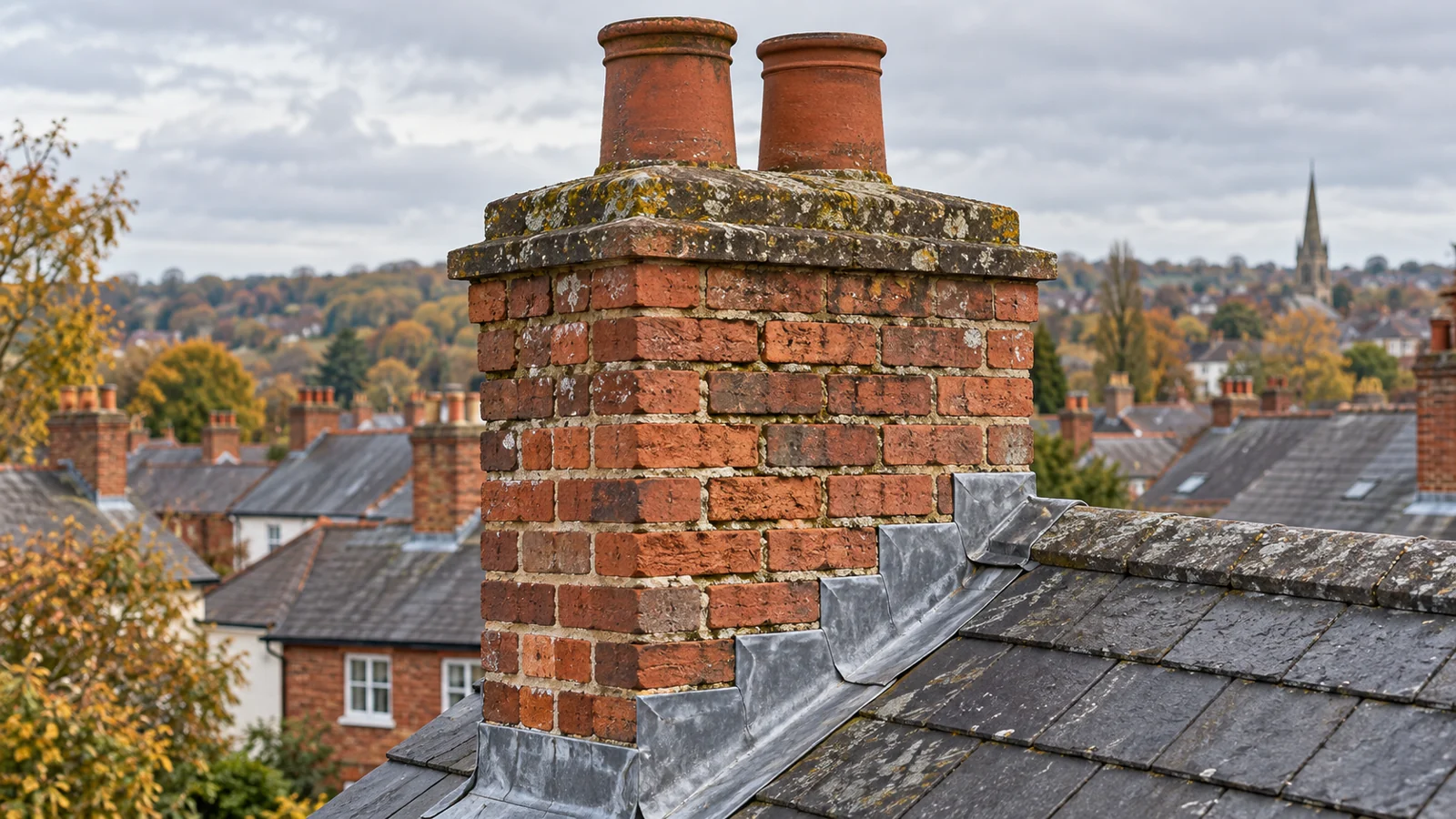
After chimney repairs, ask for a completion review while the contractor still has safe access to the stack. Compare the finished work with the written scope, request clear photographs of the repaired areas and agree how any outstanding items will be resolved before scaffold removal. Your role is to review the evidence from a safe place; the contractor should inspect the work at roof level.
A tidy-looking chimney is only part of the handover. You also need to know what was repaired, what was left in place and whether any separate appliance or flue checks remain outstanding. This guide helps you organise that conversation without attempting a roof inspection yourself.
Featured image: AI-generated illustration, not a completed contractor project.
Arrange the review before access is removed
Ask when the contractor expects to finish and when the scaffold company is due to collect. Ideally, leave time between those stages for the contractor to explain the completed work and address any agreed omissions. Confirm who controls the removal date: the repair firm may hire the scaffold from a separate business.
Do not assume that you can climb the scaffold because it is outside your house. Ask for a ground-level discussion supported by photographs or video. HSE’s guidance on working at height sets out the need to plan the work, assess risks and use suitable equipment. Access decisions belong with the people responsible for carrying out the work safely.
Use the original quotation as your starting point. For example, if it specifies repointing all four faces, photos of the front alone leave the handover incomplete. If additional brick replacement was agreed after the scaffold went up, keep that variation with the original scope and check that the final invoice reflects it.
If something is disputed, describe the item in writing and ask the contractor for a proposed resolution. Discuss any resulting access costs and changes to the programme. Follow the agreed payment terms; a completion checklist does not replace your contract.
Ask for photographs that show the whole repair
Request a set that includes both context and detail. A close-up of new mortar is useful, but it should be possible to identify which face of the stack it shows. Ask the contractor to label unfamiliar parts rather than leaving you to guess.
- An overall view: the stack and its position on the roof.
- Each repaired face: before-and-after pictures where available, showing the agreed extent of the work.
- The top of the stack: pots, their bedding and any renewed flaunching, the shaped mortar around their bases.
- The roof junction: flashing and surrounding roof coverings, including the rear of the stack if that area was worked on.
- Concealed stages: photographs taken during the job of details that the finished work now covers.
Photos help record what happened. They cannot establish that hidden masonry is sound or certify a flue as safe. If the repair involved a disputed structural defect, ask the relevant professional what inspection evidence is needed, rather than treating a photo collection as a structural report.
Match the handover to the repairs you commissioned
Different jobs need different completion evidence. Use the following prompts to ask focused questions, rather than trying to judge workmanship from a distant view.
| Work agreed | What to request | What to clarify |
|---|---|---|
| Repointing | Photos of every agreed face and the mortar specification | Which joints were renewed and which were retained? |
| Brick replacement or rebuilding | Record of the extent, replacement materials and any professional inspections | Did the work extend beyond the original allowance? |
| Flashing repairs | Views of the repaired roof junction and concealed stages where recorded | Which sections were repaired, renewed or left untouched? |
| Flaunching and pots | Top-of-stack photos and confirmation of the agreed pot work | Were pots reused, replaced or fitted with new terminals? |
| Capping or cowl fitting | Product details and a record of the flue it serves | Is the arrangement intended for an active or disused flue? |
Repointing and replacement brickwork
Ask the contractor to identify the mortar used and explain its suitability for the existing masonry. On older buildings, this deserves particular care: SPAB’s chimney maintenance advice generally recommends lime-based mortar without cement for repointing and re-bedding. That conservation guidance is a reason to discuss the specification, rather than prescribe a universal mix for every chimney.
Keep a record of replacement bricks and any changes to the rebuild extent. If an architect, surveyor or engineer was involved, clarify whether their agreed inspections have been completed and request the relevant record. Ask how new mortar should be protected and when the contractor considers any temporary protection ready to be removed.
Flashing and the surrounding roof
Flashing weatherproofs the junction between the chimney and roof covering. Historic England’s advice on repairing older roofs identifies chimney and flashing defects as possible repairable causes of damp. It supports checking the repair area carefully, rather than assuming a new-looking strip of lead proves that every possible leak source has been addressed.
Ask which junctions were included and whether any existing details remain. Request confirmation that roof coverings disturbed for access have been reinstated and that debris from the work has been cleared from affected gutters. Where a leak prompted the job, keep the contractor’s explanation of its suspected source alongside the completion record.
Pots, capping and flue use
Confirm which pot connects to which fireplace or appliance, especially on a shared stack with several flues. Keep details of any new cap or cowl. The contractor should explain the intended use of the fitted terminal and any maintenance it needs.
External chimney repairs do not by themselves establish that a working appliance or its flue is safe to use. If the work affected an active flue or its terminal, ask the appropriately qualified appliance or flue professional what checks are required before use. An unused fireplace is not a reason to make unplanned changes to its ventilation.
Keep the handover documents in one place
A useful handover file can be simple. Keep the accepted quotation, agreed changes, completion photos and invoice together. Add the contractor’s contact details, material or product information and any inspection or certification documents relevant to the actual work.
Ask for any guarantee in writing, including its duration, what it covers, exclusions and how to report a problem. Establish whether it covers workmanship, supplied products or a specified leak repair. Avoid assuming that a general guarantee covers every part of the chimney, including areas excluded from the job.
For a shared stack, make sure the records identify the work carried out and any agreed responsibilities. If permissions or inspections formed part of the project, check their completion with the relevant professional or authority. Requirements vary with the property, scope and UK jurisdiction, so the handover should refer to your project rather than a blanket claim that no paperwork is necessary.
How to prepare for the chimney repair handover
You will need: the accepted quotation, written variations, a phone or notebook and somewhere to store the supplied photographs. Arrange a suitable time with the contractor. These steps are for reviewing information from ground level; they do not require tools or access to the roof.
- Gather the agreed scope. Put the quotation and approved changes together, and note any areas excluded from the work.
- Arrange the completion discussion. Ask for the review before planned scaffold removal and confirm who can address outstanding items.
- Review the supplied photographs. Match the labelled images to the agreed repair areas and ask for missing views where needed.
- Record outstanding questions. Write down each unresolved item, the proposed action and the agreed person responsible.
- Save the handover file. Keep the invoice, photos, guarantee and relevant inspection records together, with the contact for reporting later problems.
Watch for changes after the work
If you reported indoor staining before the repair, keep dated photographs and note any new water entry or changes after rain. Ask the contractor how they want you to report a recurrence. An old mark and a new leak are different observations; neither should be judged solely from the colour of a patch.
Report renewed leaks promptly, with dates, location and weather conditions. If debris falls or a pot appears displaced, keep people away from the affected area and seek urgent professional help. Do not climb up to investigate. For the earlier stages of choosing a contractor, see our guide to avoiding poor roof repairs.
Frequently asked questions
Should I inspect the chimney from the scaffold?
No. Ask the contractor to inspect at roof level and provide labelled photographs. Review the evidence from a safe place; do not assume the scaffold is suitable or authorised for homeowner access.
What if the contractor has no before photographs?
Request clear completion photographs and a written description of the work done. Record the absence of earlier images. Finished photos can document visible work, but they cannot prove the condition of concealed details.
Does a chimney repair guarantee cover the whole roof?
Check the written terms. A guarantee may apply only to specified workmanship, products or repair areas. Ask the contractor to identify its scope, exclusions and the process for reporting a problem.
Can I use my fireplace as soon as the repairs finish?
Ask before use if the work affected an active flue or its terminal. External masonry work does not certify appliance or flue safety. The relevant qualified professional should confirm any checks and waiting period for your installation.
Make the completion review part of your next repair
If you are arranging work, ask prospective chimney repairs specialists whether their quotation includes completion photographs, a handover discussion and a clear process for resolving outstanding items. Repair Chimney is a matching service for enquiries to independent contractors; confirm the inspection and handover arrangements with the firm you appoint.
You can also start with the Local Pros quotation service to describe your project. Set out the chimney problem and ask for the scope and completion arrangements in writing before booking.