
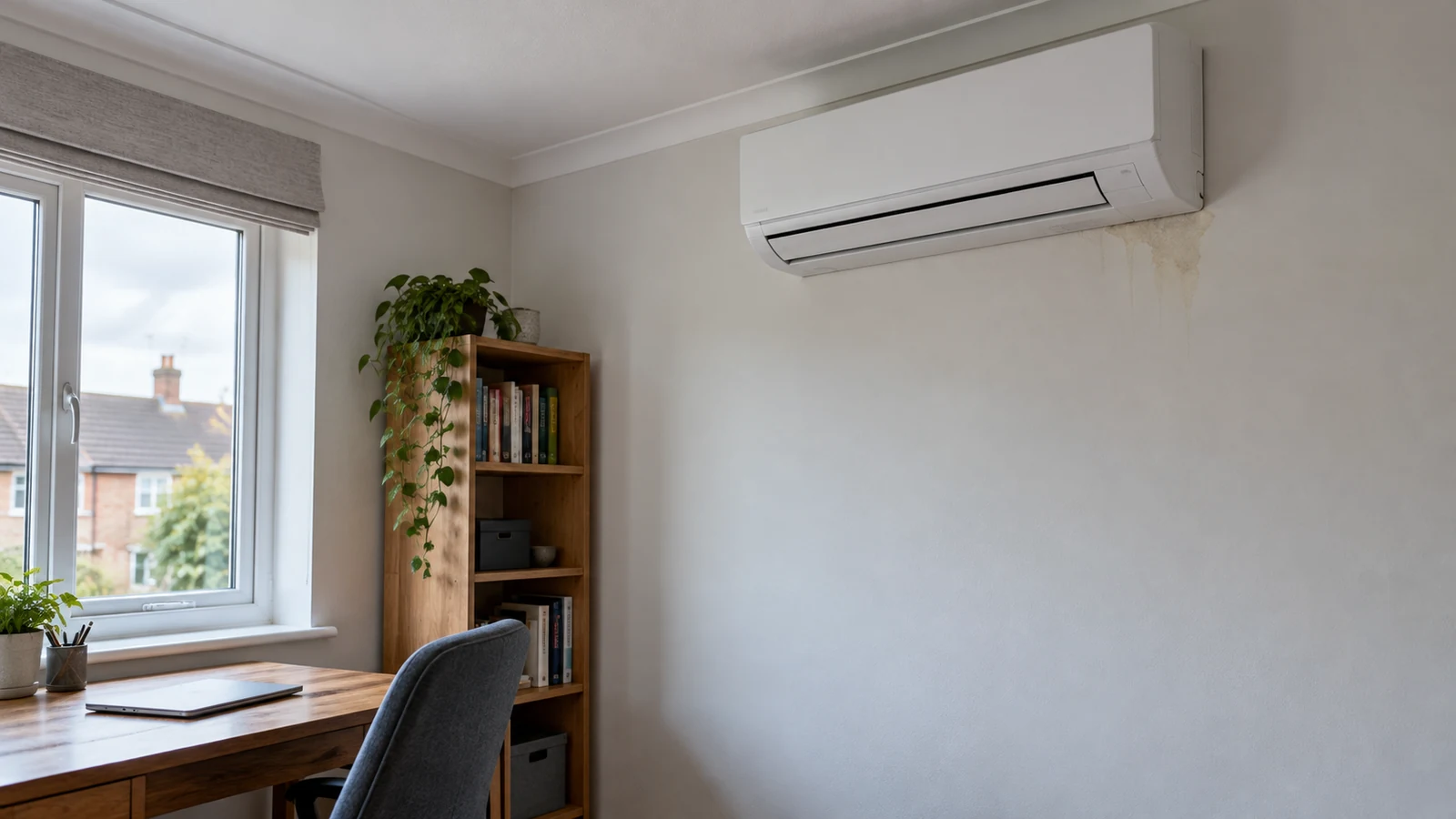
If your air conditioning is leaking water indoors, stop using the affected unit and arrange an inspection. Water running down the wall or dripping from the casing needs attention, even if the room still feels cool. Protect belongings where you can do so safely, and keep clear of any wet electrical fittings.
This guide covers fixed split air conditioning in UK homes, including bedrooms, conservatories and garden offices. It explains the difference between normal drainage and an indoor leak, the observations that help an engineer, and what to agree before paying for a repair.
Where should the water go?
In cooling mode, moisture from room air condenses on the indoor unit’s cold heat exchanger. A tray collects it and a drain carries it away, sometimes with a small condensate pump where gravity drainage is impractical. Water should follow that route rather than spill into the room.
An outdoor drain outlet dripping during cooling can therefore be normal. Water beneath the outdoor unit during heating or defrost can also be normal; check the operating instructions for your system. Neither explains water escaping from an indoor casing onto a wall.
Location matters more than the word “leak”. Tell the engineer whether the water comes from an indoor unit, a pipe covering, an outside drain outlet or the outdoor unit itself. Do not assume that visible water means the system needs refrigerant.
What to do when you notice an indoor leak
Stop the unit using its normal controls. Follow the manufacturer’s shutdown instructions and isolate its supply only if you can identify and reach the correct switch safely with dry hands. Do not touch a wet switch, socket or appliance. If water has reached electrical equipment, keep clear and seek urgent professional advice before using it again.
Move furniture and valuables out of the affected area if safe. A container or towels may protect the floor from residual drips, but do not put anything inside the unit or obstruct its openings. Some water may continue to escape after shutdown; that does not mean restarting it will help.
Do not remove screwed covers, push wire into the drain, pour drain cleaner into the appliance or try to detach pipework. Daikin’s room air conditioner operating manual identifies drain blockage, filter dirt and condensation as possible causes of dripping and warns against owner repairs. Use the manual for your own model when checking permitted care tasks.
What might an engineer need to investigate?
The same visible drip can have several explanations. These are investigation routes rather than diagnoses you can confirm from the floor.
| What you notice | Possible area to investigate | Useful detail to record |
|---|---|---|
| Water appears after a period of cooling | Condensate tray, drain blockage or drainage route | How long the unit ran before dripping started |
| A system with a condensate pump leaks or stops | Pump, float controls, discharge pipe and power supply | Any new noise, warning or fault code |
| Weak airflow accompanies dripping or visible ice | Filters, heat exchanger, fan operation and possible refrigeration faults | Whether cooling had already become poor |
| Moisture forms around a pipe covering | Pipe insulation, joints and the route through the wall | Exactly where the damp patch begins |
| The problem began immediately after installation or servicing | Drain connections, unit mounting and the work just completed | Date of the visit and whether the unit leaked beforehand |
A blocked drain is one possibility, but booking a drain clearance before diagnosis may miss the actual fault. Likewise, ice is a symptom that needs an explanation. Leave it alone rather than trying to chip it off or heat it with a hairdryer.
Notice whether water appears only in wet weather, including while the system is switched off. Rain ingress around a wall penetration may require a different investigation from a cooling-related condensate leak. Describe the pattern without deciding which trade or component is responsible.
How to prepare an air conditioning leak enquiry
You need a phone or notebook and, if available, your operating manual, installation paperwork and service records. This is an information-gathering process from a safe position; it does not require opening equipment or climbing to reach labels.
- Record the location. Note which indoor unit is affected and where water emerges. Take a photograph from the floor if it is safe.
- Write down the operating pattern. Record the mode, approximate running time before the leak, any fault code and whether other rooms are affected. Do not restart the unit to reproduce the problem.
- Find existing system details. Use paperwork or safely readable labels to identify the make and model. Include previous leak repairs, the last service date and any recent installation work.
- Explain access restrictions. Say where the indoor and outdoor units are, whether rooms can be cleared and whether access involves a locked garden, roof or neighbouring property.
- Agree the investigation terms. Ask about the attendance charge, what diagnosis includes and whether you must approve a separate repair price before work proceeds.
For example, “the bedroom unit drips from its left corner after about half an hour in cooling mode; the lounge unit is dry” gives a clearer starting point than “the air con is broken”. Add whether the system is now switched off and whether water has reached electrical fittings.
Choosing an engineer for a water leak
Ask whether the firm works on your type of fixed air conditioning and can investigate drainage as well as cooling performance. A general cleaning visit may not include pump replacement, tracing concealed drainage or testing the refrigeration circuit.
For help finding air con repairs specialists, Air Conditioning Repairs UK provides an enquiry service for introductions to independent contractors. Describe the indoor leak and request diagnosis of the cause. Its quote request does not itself book an emergency attendance, and an engineer may charge for investigation; agree availability and fees directly.
If the work involves handling F-gas refrigerant, check the technician’s relevant qualifications and the business’s applicable certification. GOV.UK explains the qualifications required for F-gas work and company certification for servicing stationary equipment. A condensate water leak does not by itself show that refrigerant work is necessary. These government pages describe the Great Britain framework; ask firms in Northern Ireland to confirm the requirements applicable there.
What should the repair quote include?
Separate the cost of finding the fault from the cost of putting it right. Before attendance, confirm whether the callout includes diagnostic labour, how extra time is charged and whether that fee is credited against an accepted repair. Ask whether VAT, travel, parts and any return visit are included.
Once diagnosed, request a written description of the cause and proposed remedy. “Clear blocked condensate drain and test drainage” tells you more than “repair leak”. If a pump is being replaced, establish whether the price includes the necessary controls, connections and testing.
Ask how the engineer will check the result under appropriate operating conditions and what happens if the same symptom returns. Accessing a concealed pipe, repairing water-damaged plaster or redecorating may sit outside the air conditioning repair. Make those boundaries clear before work starts.
If the unit is newly installed or has recently been serviced, contact that contractor with photographs and dates before arranging unrelated work. Check the written warranty or workmanship terms rather than assuming a free repair. Keep the diagnosis, invoice and test notes together for any follow-up.
Does a leaking unit need replacing?
A water leak alone is not enough information to justify replacement. Ask whether the fault is confined to drainage or points to wider deterioration, and whether suitable parts are available. Compare the proposed repair, its warranty and the condition of the complete system.
If replacement becomes a realistic option, Local Pros’ air conditioning installation enquiry page is a relevant starting point for installation quotations. Ask what removal, new drainage, electrical work and making good would include so that the comparison covers the whole job.
Frequently asked questions
Can I keep the air conditioning running with a towel underneath?
Stop the affected unit and arrange advice. A towel may catch residual drips but does not resolve the fault or protect concealed electrical components from water.
Does water dripping indoors mean the refrigerant is leaking?
No. Condensate water and refrigerant are separate parts of the system. Visible water does not establish a refrigerant leak, and a regas should not be agreed solely on that symptom.
Should I clean the filters before calling an engineer?
Report the active leak first and leave the unit off. Tell the engineer when the filters were last cleaned. Only carry out user maintenance permitted by your model’s manual when access and electrical conditions are safe.
What if the leak stops before the appointment?
Keep the photographs and timing notes, and tell the engineer that it has stopped. Intermittent symptoms still need investigating; do not restart the equipment simply to recreate the leak.
Book an investigation with a clear brief
Send the unit details, leak location, operating pattern and access information, then agree the diagnostic charge before attendance. Ask for a cause, a proposed remedy and a check of the finished repair so you can decide on the next step with useful information.